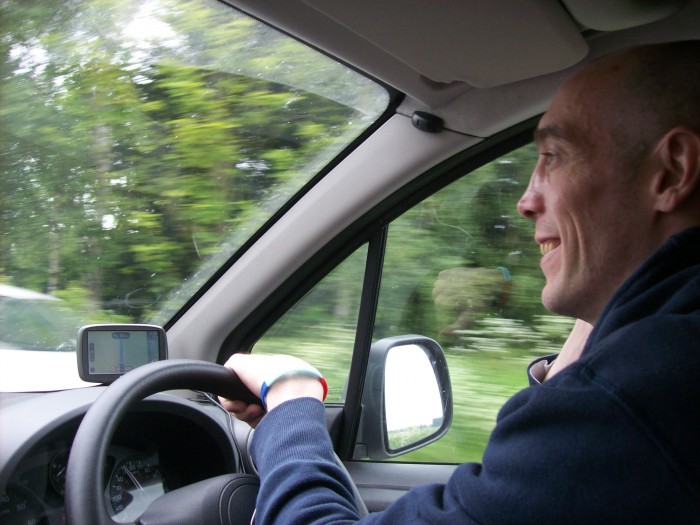
John Welsh, aka Scout The Doggie, pictured here in civilian mode, with his young son.
This month, our correspondent Hazel Randall spoke to airsofting legend, Scout The Doggie about his many adventures in the sport.
It was a great pleasure to talk to Scout the Doggie, whose YouTube videos have inspired so many people to take up the game of airsoft. With almost 700,000 subscribers to his YouTube channel and over 200 million views of his airsoft videos, Scout’s popularity continues to draw thousands of visitors from the UK and abroad to Section 8, a 1,400-acre woodland skirmishing site in Scotland, where he does most of his filming.
Airsoft skirmishes
Originally designed for target practice, airsoft guns first made an appearance in Japan, circa 1980, and were introduced in the UK a decade later. Since then, airsoft equipment has been used for police and military training drill and, increasingly, for recreation. Registered airsoft sites are plentiful in the UK, with a growing number of enthusiasts gathering at weekends for skirmishes.
The appeal of airsoft skirmishing has a lot to do with the illusion of realism. Airsoft guns are replica weapons that launch spherical, non-metallic pellets, and the games are played out in unmodified woodland or disused industrial areas.
There is often no evidence that a pellet has hit a player; therefore the game relies on a system of honour, whereby a player who is ‘killed’ must declare the fact. Although some occasional cheating occurs, the airsoft code of honour is tight, and when dishonesty is discovered, it is never tolerated.
That’s not to say that the pellets are totally harmless:
“These guns will knock people’s teeth out. I’ve seen them embedded into players’ faces and ears, and jammed up noses, which is why many choose to wear full face masks”, Scout tells us.
Scout the Doggie
He’s one of the best known personalities in the rough-and-tough world of airsoft. Scout the Doggie, is a Scotsman who dominates the international YouTube airsoft scene with his exciting videos of simulated military battle.
A little daunted by the masked, gun-toting, gruff-voiced action men (and women) on the videos, I must say I was a trifle apprehensive about talking to the mysterious figure behind the camera. But
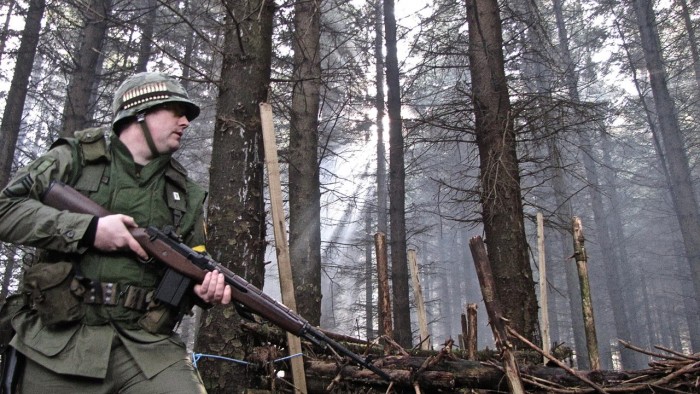
Airsofting can sometimes involve re-enactment. Like this WWII Uniform. (Credit: John Welsh)
when I spoke to the real life person who adopts Scout as his ‘stage’ name, John Welsh’s gentle Scottish voice and friendly chuckle put me immediately at my ease.
John is a skilled film maker. Before his involvement in the world of airsoft, he made training videos for large companies. He had no training in the medium – unless you count the one-day course at the Apple store in Glasgow:
“That took about an hour!” John told me.
Scout at Section8, the Scottish airsofting location. (Credit: John Welsh)
John has always been an avid collector of music videos and has used his filming skills to capture rock legends such as AC/DC and the Sex Pistols on film. His extensive video library has contributed to media archives all over the world, and on several DVDs, John is credited for the footage he supplied.
So how and when did John get into airsoft skirmishing?
About ten years ago, he bought a Heckler & Koch MP5 airsoft rifle for a close friend’s birthday.
“I was really impressed with the quality of it. As kids, we’d had a lot of fun with airguns, and I suddenly got the urge to do a bit of shooting again. The first gun I bought for myself was a Tokyo Marui G3/SG1. There were many more after that!”. Another one of John’s favourite airsoft guns is the AGM MP40 rifle.
The first time John tried out airsoft, he went alone. “My expectations were exceeded. It was far better than I imagined – much more organised and just good clean fun.” He added, mischievously, “It’s great meeting new friends – and then shooting them!”
And the videos?
John was always keen to introduce friends to the world of airsoft, but found that some people were reluctant to give it a go. So, about a year after his own initiation into the game, he took a video of the action in order to share with his friends the fun that was to be had at a skirmish. He put a few of these videos onto YouTube and was surprised at their popularity.
In an airsoft game, when you’re ‘killed’, you have to drop out of play until a new game begins. During these periods of inaction, John would video his team mates, edit the footage, and post the videos on You Tube. He was beginning to get a name for himself, and it wasn’t John. Scout’s stage name was in fact taken from his beloved dog, a very dear white German Shepherd.
The popularity of Scout the Doggie’s videos grew so quickly and unexpectedly that John was soon in a position where strangers all over the world were familiar with his videos and the regular players who featured in Section 8 skirmishes. Other sites were keen to have Scout film their airsoft games, and airsoft manufacturers benefitted hugely from Scout’s product endorsements.
What are Scout the Doggie’s plans for the future?
“I’d love to visit the USA,” he told me. “Most of my views come from America, closely followed by the UK and Germany. So I’d maybe film at a few American airsoft events. But to be honest, I’d be happy just to spend most of my time meeting the people who watch my videos.”
In this month’s Brand Focus, Joe Meakin takes a closer look at German manufacturers, Umarex, whose produce a wide range of highly prized airguns under a variety of big name brands.
Umarex is a fairly new company in the world of airguns. The company formed in 1972, after a new weapons act in Germany was passed that same year. At first Umarex produced a range of blank firers and airguns which could be freely purchased over the counter, a proposition which appealed to the 10 million strong fanbase of recreational shooters in the country at that time.
The History Of Umarex
The company started off as Mayer & Riem, with its founding members Franz Wonisch and Karl Mayer Senior. They were joined by Wulf-Heinz Pflaumer and together they set off to create what would since become one of the largest companies in the firearms and shooting business today.
In 1972 the company’s product range was rather limited, with only one gun being produced, which was the Perfecta Model G1, a blank firing pistol. The company quickly expanded, as they became one of the largest importers of airguns from China, taking in brands such as Daisy, Norica, Milbro and Marksman. These made a huge impact internationally in 1974/75 and they even managed to secure the exclusive rights for Marksman and Daisy at this time, heightening their success even more.
Although Umarex were growing as a company, a lot of the wholesalers were ignoring them, and the only path at the time for products was from wholesalers to retailers with no direct link to the manufacturer. Umarex decided to take the innovative step of bypassing the wholesalers, and go direct to the shops to sell their goods. By 1976 they had six sales representatives visiting gun dealers around Germany. In total, there were around 1000 gun shops in total selling Umarex products and this meant that the growth rates for Umarex averaged 30 – 50%, which set them up for the future ahead.
Walther, Colt, Browning And More: Iconic Big Brand Replicas
Since then Umarex has gone on to seal deals with some of the biggest names in the business such as Beretta, Browning, Colt, Magnum Research, Smith & Wesson, to produce licensed versions of their most famous firearms in all sorts of airgun variants. This brings much loved icons to the realms of recreational shooters that usually wouldn’t be able to own them, due to licensing restrictions in different countries and regions.
One of the most popular pistols in this category is the Beretta M92FS Co2 pistol which comes in Black and Nickel models, complete with the authentic markings just like the real thing. These pistols are made to very high standards, in full metal which provides a heavy weight feel, and great quality. The hammer, trigger and safety work just like the real model, and the pistol fires pellets from an 8-shot magazine for excellent reliability, accuracy and precision. Another popular model is the Smith & Wesson 586 which come in a 4inch and 6inch variants. Again, this is made from full metal, fires .177 pellets from a different 10 shot magazine and is very high quality. If you’re looking for a top notch co2 pistol, then look no further than the offerings from Umarex.
Hammerli & Walther: Sporting Prowess
Some of the other names that the Umarex group own are Walther, Hammerli and Rohm, which have been acquired over the years to extend their product range further. The products produced under the Walther & Hammerli names are high quality and extremely accurate target rifles and pistols which have been used by competitive shooters at Olympic levels for years.
The base model is the Hammerli AP20 which uses a great deal of components from the AP20, but isn’t to quite the same standard as the Walther range. The AP20 is a compressed air pistol, which provides excellent accuracy, and is perfect for an introduction into target shooting, allowing the user to get comfortable with this type of weapon, are they are quite different to standard pistols.
Moving up from the Hammerli into the Walther range of pistols is the Walther LP400, which comes in several different styles with a carbon barrel shroud or aluminium, but the components behind these are all the same. The LP400s are a firm favourite for Olympic level target shooting and if you have any doubts about the accuracy, each pistol comes with a paper test target with just one hole in, but 5 shots fired at it showing just how well made these pistols are. A range of grips are available in both left and right hands, with different sizes as well for all types of shooters today.
Quality PCP Rifles
Umarex also produce air rifles under the Walther name in both PCP and Spring power plants, with PCP offerings ranging from the top selling Walther Rotex RM8 with an 8-shot magazine system, to Spring powered rifle such as the Walther LGV, Walther LGU and Walther Terrus which are all fine rifles.
The range of Walther LGV and LGU rifles are technically very impressive with the internals running on synthetic bearings for low friction, which ultimately requires a less powerful spring so recoil is dramatically reduced. This also makes it very quiet, so when fitted with a silencer it is almost near silent. This all adds up to very accurate and quiet rifles, ideal for hunting, pest control and target shooting with many field target shooters turning to a Walther LGU or LGV for their first choice.
Umarex are always at the forefront of new designs for airguns, and are very good with releasing new products at a large trade show in March, so if you’re a Umarex fan, keep an eye out each year around that time for the latest in new products from Umarex!
This month we look at the a question which is often asked by airgunners. Understanding the rules, regulations and laws around pest control is an important part of being a responsible air rifle or air pistol shooter. Read on to find out more….
What animals are considered to be pests? What species can you shoot?
In some cases, the law is plain; in others, it’s a bit hazy. The UK’s strict gun laws, together with animal welfare legislation, have a tight rein over an individual’s right to shoot a non-domestic animal. And the definition of a ‘pest’ is not subjective.
Here are a few examples of some common UK wild animals that you might want to go to battle with.
Pigeons
By law, urban pigeons cannot be shot. Various rules cover the shooting of woodpigeons
The national population of woodpigeons has doubled over the last 25 years and has become a serious pest to the UK farming industry. The woodpigeon is prolific throughout Europe, but the UK population is unique in that it’s mostly non-migratory. This means, of course, that the birds never go away, and crop damage occurs throughout the year.
The growth of the woodpigeon population is directly related to the increase in oilseed rape farming. Traditionally grown purely as animal feed, oilseed rape has become a lucrative crop; and as the woodpigeon’s preferred food, the two species have flourished side-by-side. The herbivorous woodpigeon, however, is not fussy, and the annual cost of general crop damage runs into millions of pounds.
In towns and cities, feral pigeons congregate on roofs and ledges, their faeces dropping onto the ground. Due to the bacteria and ectoparasites present in pigeon droppings, they are considered to be a health hazard. As for the nuisance aspect, the build-up of debris from roosting pigeons can cause blockage of drainpipes and gutters, to the cost of freeholders and tenants.
It stands to reason that urban-dwelling pigeons cannot be shot, and there are several alternative systems in place (none of them particularly effective) to control the population. The shooting of woodpigeon in rural areas is controlled by general licences issued by government agencies, authorising the shooting of animals for specific purposes, such as the prevention of serious damage to crops and the preservation of public health.
Although you do not need to apply for general licences, you are required, by law, to abide by their terms and conditions. So it’s essential to inform yourself of these rules before you attempt hunting with your air rifle (check the BASC site for further details).
Grey Squirrels
The grey squirrel is an opportunistic pest
Because squirrels bury nuts, but do not remember where they buried them, they are very useful to tree populations due to the carefully dispersed seeds. But this doesn’t cut much ice in the popularity stakes. The harm done to woodland by the little grey squirrel far outstrips the benefits.
Grey squirrels are opportunist feeders, thriving on a wide variety of food, including berries, fruit, seeds, nuts, flowers, and leaf buds, fungi, insects, birds’ eggs, and fledglings. They also have a penchant for the phloem tissue (sweet, sap-filled layers) just beneath the bark of trees, which is responsible for the movement of sugars within the plant. Removal of bark and phloem tissue can cause permanent damage to the tree.
The grey squirrel is a carrier of the squirrel pox virus, an infection to which it is immune, but which is harmful to the rarer red squirrel. Carcasses showing signs of squirrel pox – scabs around the mouth, eyes, nose, feet, and genitalia – should be sent to the Animal Health and Veterinary Laboratories Agency (AHVLA) for investigation.
Free shooting of grey squirrels is generally accepted, but the Animal Welfare Act 2006 is clear: it is illegal to cause ‘unnecessary suffering’ to an animal under your care. So you must make a clean kill, and that typically means a head shot. Targeting your quarry using a scope, and using an powerful, accurate air rifle or pistol is essential. Alternatively, you can use a rimfire rifle or shotgun, if you have access to these. In 2010, the first person to be prosecuted in the UK for causing harm to a non-domestic animal was fined £1,500 for drowning a trapped squirrel.
Rabbits
Rabbits can be shot in the daytime by the occupier of the land and one other authorised person, who can be part of the household or staff, or an individual employed specifically for the control of rabbits for remuneration.
Moles
It is illegal to shoot moles.
Magpies
The magpie is a protected species. However, the law allows the killing of a magpie for the purpose of bird preservation, a concept which is vehemently supported by members of Songbird Survival, a charity that was set up to protect the declining songbird species in the UK. If you shoot a magpie, you may have to prove in a court of law that you had acted lawfully, which could be difficult, due to a lack of evidence that magpies do actually affect the conservation of other bird species.
Rats
Rats are legal quarry for shooting
Of the two species of rat in the UK, the most common is the brown rat (Rattus norvegicus). They carry diseases – salmonella, listeria etc – which can spread to humans; they eat the eggs of ground-nesting birds; and they destroy property. They are not popular fellows.
Rats need to gnaw constantly in order to wear down their incisor teeth, which never stop growing. They cause floods by gnawing through lead pipes, dangerous gas leaks by chewing through gas pipes, and fires as a result of stripping insulation from electrical cables. It has been estimated that 25% of electrical fires in the UK are caused by rats.
The rat is included in the legal airgun quarry, so it is legal for a person authorised by the landowner or tenant to shoot rats with an air rifle or air pistol. The famous Crosman Rat Catcher is an example of an effective weapon to use in these situations.
When shooting in a confined area, take care not to allow pellets to stray beyond your boundary. Use food to coax your quarry to a spot in front of a backstop such as a brick wall or a carefully positioned concrete slab.
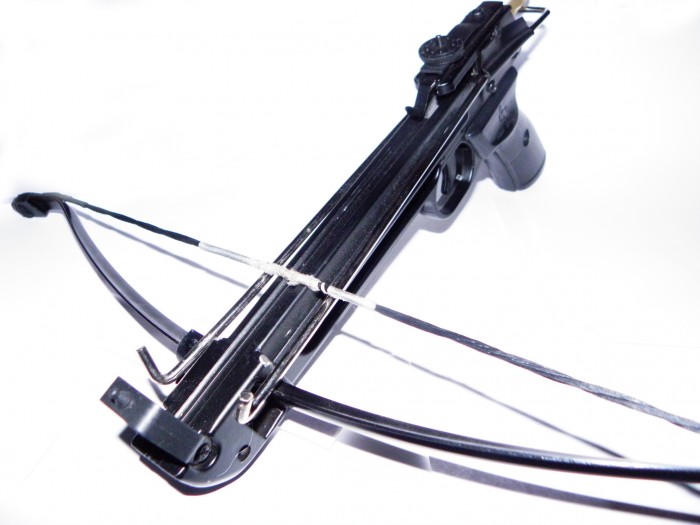
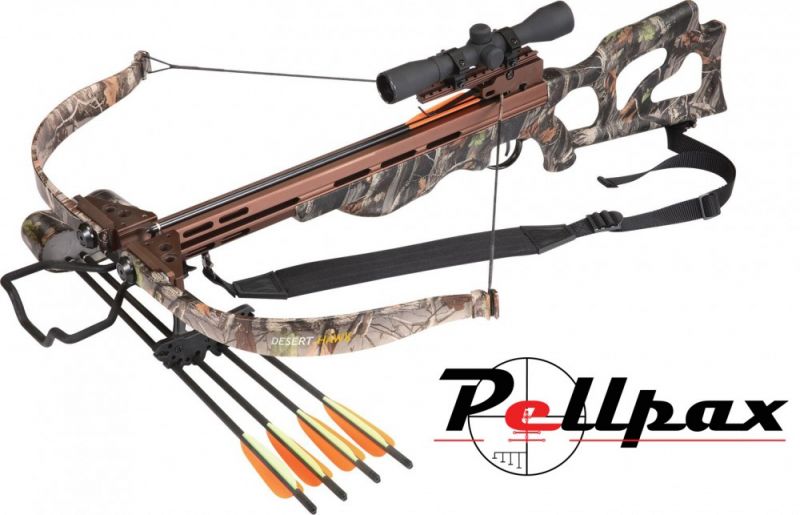
Our resident weapons enthusiast Steph Brooks gives us the lowdown on everything you need to know about crossbows. from different types such as compound and recurve, to bolts and other accessories, and more. Read on to find out…..
So you’ve been watching The Walking Dead, have you? Daryl Dixon’s nifty crossbow skills may be new to you, but they have a very long provenance, going back thousands of years. Crossbows have been weapons of choice since their invention in rural China around the 6th century BC. Sun Tzu’s influential book “The Art of War”, which is dated around 500 BC, mentions the crossbow specifically in several chapters.
The Crossbow did not see widespread use until the battle of Hastings (1066) where crossbows were used by the French to successfully invade Britain. These crossbows used a recurve design, essentially a hunting bow laid sidewards and mounted onto a stock. The advantages of this design were that because the crossbow could be drawn with both hands it could be much more powerful than a standard bow allowing them to punch through conventional armour.
Today, crossbows are used mainly for target shooting and archery competitions where their power and accuracy allows for longer effective ranges when competing. Crossbows are also used for hunting in several parts of the world, but not in the UK where bow hunting has been illegal since 1965. The most up to date version of this law, the Wildlife and Countryside Act 1981 did nothing to change this and crossbow hunting looks to remain illegal for the foreseeable future.
Recurve or Compound Crossbow?
There are essentially two different designs of crossbow, the recurve crossbow design, detailed above, andcompound crossbows which use a series of cams to allow for more power compared to recurve bows, with shorter and sturdier limbs. Compounds use their system of cams to allow for much easier cocking and don’t require the same level of physical fitness to draw as a recurve bow of similar draw weight.
Another advantage of compound bows is that the trigger box doesn’t hold the peak tension of the bow string reducing wear on the trigger sears over time. Compound crossbows also shoot the bolt much faster for the same draw weight leading to flatter trajectories. The compound crossbow also features slimmer and sturdier designs which maintain great balance between the hands while shooting.
When it comes to recurve bows, their more traditional design is simple and effective and has been an useful tool for many centuries. Compared to the compound bow there is much less that can go wrong and when something does go wrong a bow press is not required to re-string it. If you like the idea of doing all the maintenance work yourself then recurve crossbows are the way to go.
Recurve crossbows are also cheaper than their equivalent in compound and also tend to be lighter and easier to aim. The compound bow is much easier to re-string with no special tools such a bow press required. Recurve crossbows are also more silent to shoot although the difference is not that significant, and since hunting is illegal this is not much of a consideration.
Crossbow Bolts
Instead of using traditional arrows that are used in archery, crossbows use bolts, which differ from arrows as they do not feature stabilising vanes at the back and also tend to be shorter. In conversation the words bolt and arrow are interchangeable so be aware when purchasing, particularly online.
The main body or “shaft” of the bolt can be made from a variety different materials which used to be wood but are now usually made from carbon or aluminium. Wood and plastic have a habit of splintering when striking a hard surface where as aluminium and carbon are just as lightweight, but far more resilient. Wood and plastic bolts are only really suitable for casual shooting withpistol crossbows. Carbon bolts are stronger than their equivalent in aluminium but do tend to be more expensive.
There are also two types of knocks available, half moon, which feature a concave indentation at the end, or flat. Different crossbow manufacturers recommend different knocks but the majority seem to prefer the half moon. The reason for this is that the indentation helps the bolt sit better on the string, increasing accuracy.
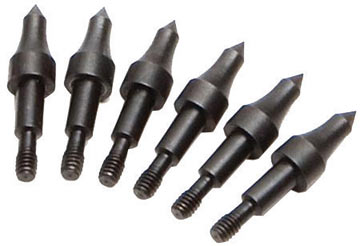
When it comes to the other end of the crossbow, there are several points available with the majority being variations of the broadhead designed for hunting. Here in the UK, the only points available are field points which are just sharp enough to get stuck in a target without passing all the way through or destroying it. These field points generally weigh between 125 – 150 grain with each crossbow preferring a different weight. When selecting a different bolt make sure that the bolts you buy are either the same weight or heavier than your crossbows recommended weight. Shooting lighter bolts can be very dangerous as it can cause the crossbow to dry fire which can break the limbs and will also void your warranty.
Crossbow Accessories: Scopes, Sights & More
There are many accessories that can be attached to a crossbow with the majority of crossbows, particularly compound models featuring rails that allow for the fitting of scopes, laser sights and red dot optics. With some of these crossbows shooting further than conventional air weapons, a set of optics might be the right choice.
You can either go for a conventional rifle scope with ring mounts and seeing as crossbows are capable of shooting at great range a scope such as the Hawke Vantage 4-12×40 that offers a little more zoom than standard 3-9×40s. Another option is ared dot or reflex sight that projects a red, or green, laser dot onto a glass screen allowing for easy aiming that is perfect for mid powered crossbows. For shorter range crossbows, a laser sightmight be of use. These sights project lasers onto the target allowing you to see precisely where you are aiming but are only useful at short to mid range and are better suited to night time shooting where the laser is more visible.
Another accessory that is essential for any serious crossbow owner is lubrication, since the string needs this on a fairly regular basis. How often the string needs lubing depends on a variety of things, such as how often you shoot and how high the draw string is on your crossbow. Make sure to apply the wax using your fingers right along the length for the string except for the part that is above the arrow rail as it will gum up the trigger box. The best waxes are madespecifically for crossbows but beeswaxalso does a great job.
Conclusions
Crossbows can be very effective tools in the right hands and combine the fun of a bow and arrow with the customisability and precision of a rifle, leading to a hobby that many people enjoy all over the country, with several ranges and clubs springing up to cater to everyone from beginners to experienced shooters.
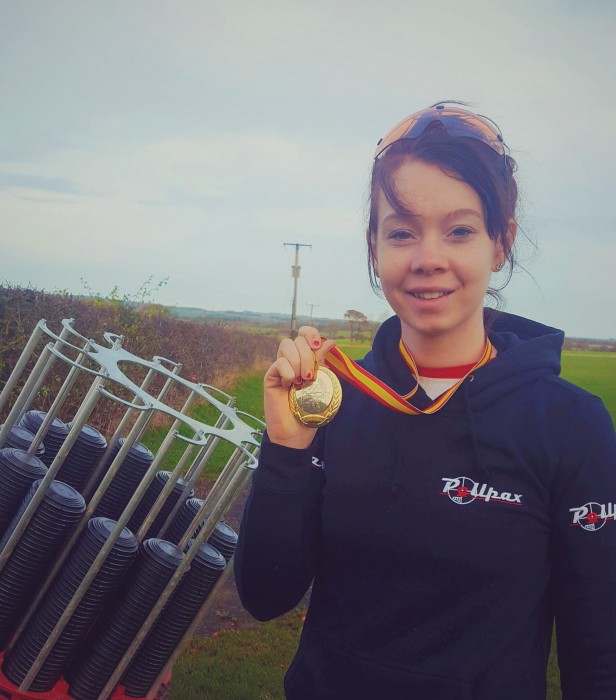
We are very proud to be sponsoring the talented young Olympic hopeful, Amy Brown. At just 19 years old, Amy has already achieved impressive results in the world of skeet shooting, and her personal best scores are rocketing.
After being scouted by an APSI (Association of Professional Shooting Instructors) coach in the summer of 2015, Amy was successful at the Target Tokyo trials and, later that year, competed in the British Championships, taking second place in the Junior Ladies’ category.
This year, representing England, Amy took first place in the Junior category at the Captain’s Cup against Scotland, achieving two personal bests. In awful weather conditions at Bisley Shooting Ground, in Surrey, Amy shot for Team GB, taking third in Juniors and 11th overall. She also beat her competition personal best by six clays.
Later in the summer, Amy competed at the International Grand Prix in Holland, her first international competition, where she achieved ‘high gun’ position on both days and won team Gold. This success was closely followed by another international competition in Serbia.
In the summer of 2015, Amy passed ‘A’ levels in Maths, Further Maths, Physics, and Chemistry, and then took a gap year so that she could dedicate her time and effort to Olympic Skeet. Now, studying Law in her first year at Northumbria University in Newcastle, Amy is juggling her two worlds of shooting and academia; but this doesn’t seem to faze her. When Amy attends shooting events, tutors are sympathetic to her need for time out from her studies; and on her return, Amy just buckles down to work in order to catch up.
As well as shooting in competitions, Amy trains regularly, dividing her time betweenBywell Shooting Groundin Northumberland, Beverley Clay Target Centre in East Yorkshire, and Auchterhouse Shooting Ground in Dundee, Scotland, where she receives instruction from her coach, Iain McGregor. She also works out at the university gym several times a week to maintain her stamina and upper body strength.
International competitions take Amy out of her comfort zone. In the late summer of this year, she flew to Málaga, where, doused in sun-screen, she sweated her way through the Junior Grand Prix in uncomfortably high temperatures. It wasn’t just the heat, however, that tested Amy’s resilience.
“I found it quite nerve-racking, competing against strangers. There were a few other British competitors, and I knew most of them, but there were so many people I’d never met before, and shooting in front of them made me nervous!”
However, Amy is a very determined young woman. I was surprised by the fact that she had booked her own plane ticket, accommodation, and car hire – daunting tasks for a 19-year-old. Amy is focused on success. She rises to every challenge that faces her and takes everything in her stride.
And how did Amy get on in Málaga? She won Gold in the Junior Ladies event.
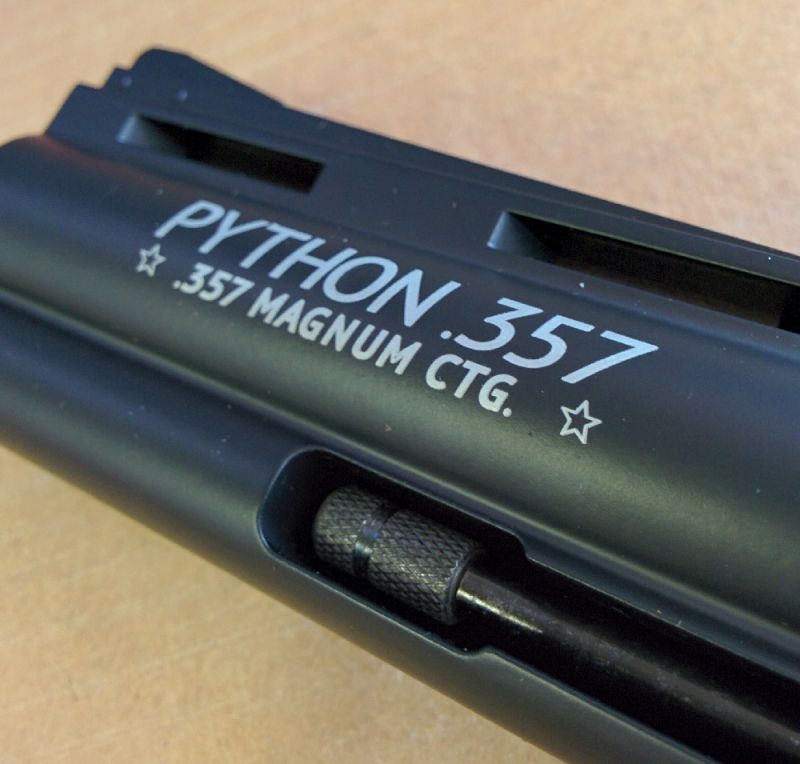
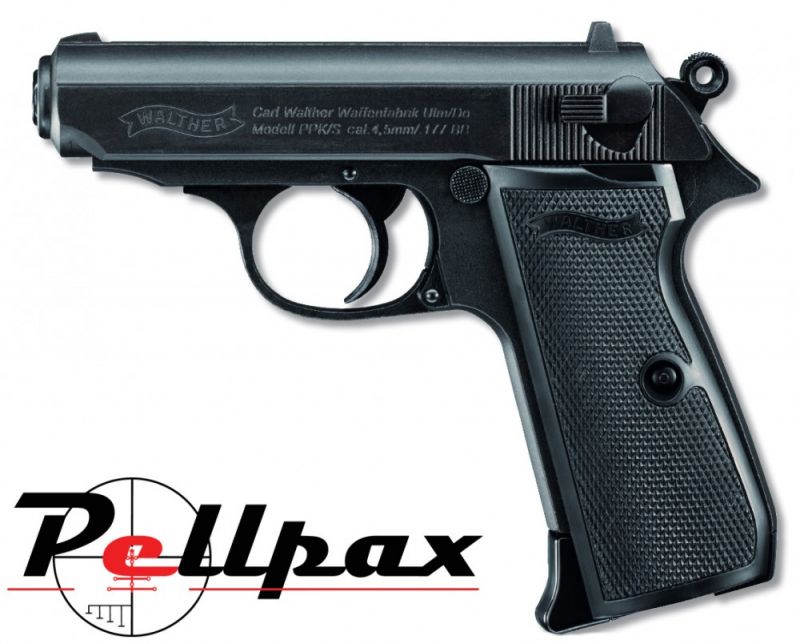
Two more iconic pistols on the Face Off today, the legendary Colt Python Black and the Walther PPK/s in 4.5mm BB. The original Colt Python was chambered in .357 Magnum and has been a staple of John Wayne movies for years and Chuck Norris used to carry one of these iconic pistols during many episodes of Walker Texas Ranger.
You can even buy a John Wayne patriotic .357 revolver which may be the most American thing I have ever seen. Quite a resume, I’m sure you’ll agree. On the other hand, the Walther PPK is perhaps one of the most iconic movie pistols of all time thanks to none other than James Bond. Now who would win out between Chuck and James? Not an easy question but here goes.
I Feel Lucky
Picking up both of these pistols, there is a definite difference in weight, the Colt Python weighs the best part of a kilo whilst the Walther PPK feels miniscule in comparison, weighing in at just over 500 grams. Being heavier than the PPK, you might think that I would dislike the Colt, but it all comes down to what I like to call the “do you feel lucky?” factor and the Colt has it in spades.
The Python’s weight gives is a real sense of power and you really forget that you are holding a BB gun, aiming it down the range, I got the sense that anything I shot was going to explode into a thousand tiny pieces. The black finishing on the Python is absolutely excellent and the Colt logo and .357 Magnum lettering down the barrel further enhance a sense of realism.
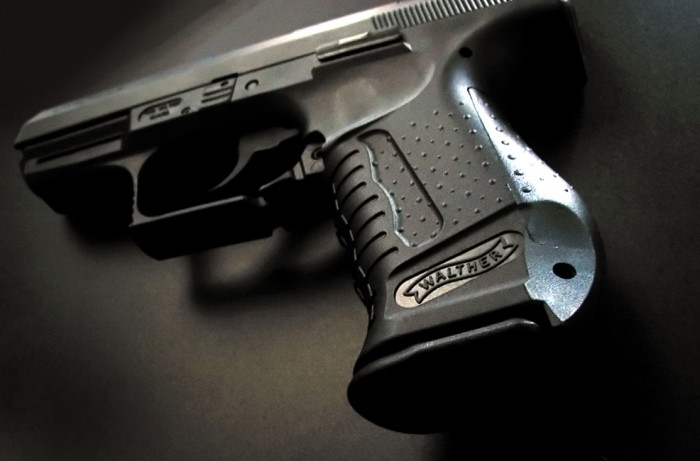
The PPK is extremely well made and is based around a full metal frame which, despite the lighter weight, prevents the pistol from feeling too much like a toy. The only plastic parts of the gun are the pistol grip, safety lever and outer barrel shroud which is fantastic for reliability and a real rarity for a pistol of this price. Powered by 12g CO2 capsules, the old version of the PPK featured a very obvious knob which had to be turned to screw in the CO2 but this has now been changed into a slimline screw that fits flush to the grip.
A welcome change from my point of view and one that really improves the look of this pistol. The Walther PPK is a different kind of pistol than the Python, one that might by tucked into the inside of diner jacket when playing poker with a table full of the worlds villains and holding it I never got the sense of power that I got from the .357. The advantage that the PPK has is a sense of sophistication and style that is more to my personal taste.
I’m going to give this one to Walther PPK simply because of the added sense of suave that it possess, basically James Bond got way more girls than The Man with No Name.
Winner : Walther PPK
Special Operations
The Walther PPK features a 15 round drop out magazine that disappointingly made of plastic and is a little fiddly to refill. I have never been much of a fan of magazines where you have to compress a spring to load BB’s as without a speed loader, the BB’s often end up all over the floor. The Colt Python is loaded with imitation shells that house the BB’s before they are pushed into the barrel and are less fiddly to refill, but only hold 6 BBs at a time.
The Colt Python only comes with 6 shells, it would have been nice to have spares included but they are easily available. Another accessory that comes in handy is a speed loader which is included with the pistol. One complaint I do have with the Python is the arm that holds the swing out cylinder isflimsy and light and although I experienced no problems when shooting the pistol myself, I wouldn’t violently swing out the cylinder with too much force in case that arm bent or snapped.
The trigger of the PPK is extremely light and responsive and, when combined with the blowback action makes the pistol great fun to shoot. I would have preferred a metal safety switch instead of the polymer one that the PPK is fitted with but it does the job. The safety on the Python has a tendency to stick in the on position, which is better than sticking in the off position, but a bit of annoyance none the less. It maybe because the gun was new and requires a bit of use to loosen up which is often the case with CO2 pistols and revolvers in particular because of the multiple moving parts.
I was actually impressed with the overall finish of both pistols and with the PPK in particular, despite its magazine, looking like a gun that cost several times the price. The Colt is let down by a few niggling features but I am being overly critical for the purposes of this review and these minor issues will not likely be of importance to the average shooter.
Winner : Draw
The Important Bit
Some people buy pistols to put them in display cabinets, but most people buy pistols to shoot things with. The proof of the pudding is in the eating as they say so I set up a range at about 6m and fired about 50 Bbs, some ProShot precision A Grade, through each. The first thing to say about the Colt Python is that its rear sights are fully adjustable and make target shooting so much easier, no such luck with PPK although the fixed pistol sights work well enough.
It is worth saying that neither of these pistols are going to win you any awards in target shooting, nor will they kill a rat, but they are great fun for hitting tin cans in the garden and make great practice pistols or props for home movies, particularly the PPK with its blowback action.
With the Colt Python, I found myself reliably hitting the centre of the target with no issue but the grouping was larger than I would have expected at this range. I think this lack of accuracy comes from the way the pellet is fired from the tip of shell instead of from a regular magazine.
The shells all have to be loaded individually and any slight difference in the way that the BBs are loaded can cause quite a large difference in accuracy, something to bear in mind. Taking aim at the target with my PPK I noticed that this pistol seemed to be shooting slightly low and right but does group surprisingly well and with a little adjustment of my aim I was reliably hitting the centre two rings of the target.
To investigate the problem with the BB’s dropping off a ran both pistols through my own personal Alpha chronograph and found the Python to running at around 2.3 ft/lbs where as the Walther was shooting at less than 1.5 ft/lbs. The reason the pellets were dropping off was because of the Walther’s lack of power. I checked to see if the gun was leaking gas or the barrel was slightly obstructed but no the gun is just a bit underpowered for my liking. Not too much of a problem and could actually be spun as a positive as less power usually means more shots. Unfortunately the Blowback action of the PPK is also powered by the CO2 making it one of the more hungry CO2 pistols I’ve fired. Disappointing.
Trying to pick a winner is a bit of a strange one, the PPK is more responsive, blowback and just more fun to shoot, but the Colt is both more powerful and more accurate. Comes down to what you are looking for I guess, fun or functional. In my opinion the Walther just edges it, yes the Colt is slightly the better shooter, and it is slight, but the purpose of these pistols is not to hit cans, it is to have fun and the PPK is undoubtedly the most fun.
Winner : Walther PPK
In Conclusion
Both pistols are inexpensive but the fact that the Walther PPK/s comes in at under £100 makes it an absolutely essential purchase for any collector or air pistol enthusiast. The Colt is a nice revolver but there are other nice revolvers on the market, the Dan Wesson or the Peacemaker are both great choices and are available at a similar price. With the Walther it is impossible to shoot better for less.
The world of air rifle scopes can be a confusing place for those who are ill prepared. Choosing the right scope for your air rifle can be as important as deciding which pellet or calibre you are shooting with, when it comes to success. Sub 12ft/lb air rifles will kill at ranges up to 50 yards, and trying to judge your impact point at these ranges with iron sights can be almost impossible. Luckily, there are many manufacturers on hand to help you.
Brand Awareness
Deciding on your brand is simple enough when you know what each has to offer. Brands like BSA, SMK and AGS look like the real deal but don’t offer much in terms of magnification or lens quality, and are not really suitable for anything more than informal target shooting. One thing I would say is there is more to picking a scope than just what magnification you want. For example, not all 4×32 scopes are the same and when it comes to picking optics, most of the time you really do get what you pay for.
At just 18 pounds more expensive than the BSA scopes are the Hawke range of air rifle scopes and the difference in quality is immediate and obvious. The mono tube construction of the scope is made from anodised aluminium which not only makes the scope incredibly strong, but also makes the Hawke range of scopes the exceptionally light and unlikely to affect the balance of your rifle when attached. These scopes are so well made that they are even suitable for centerfire and rimfire rifles thanks to their inherent ability to withstand recoil.
The lenses of the Hawke scopes are multi coated to transfer as much light into the eye as possible, producing a crystal clear image of the target in all light conditions and are available with a range of reticles and magnification options. Available from around £50 all the way up to the mid £800s, there is an air rifle scope for everyone in the Hawke range.
Slightly more expensive than the cheapest of the Hawke range, MTC produce a range of scopes that are not too dissimilar to their lower priced alternatives. Their glassware is not noticeably different from most Hawke scopes but a lot of the MTC scopes come with illuminated reticle as standard, something you have to pay extra for with the Hawke models.
Starting at around the 260 pound mark, Bushnell air rifle scopes are similar in price to the most expensive of the MTC range but their Ultra High Definition range delivers some of the most accurate target selection in any range of scopes. Their glassware is of the very highest quality and the fast focus eyepiece is located at the rear of the scope and is easily adjusted for target acquisition in seconds.
The matte black body of the scope is made from a specially formulated alloy that is water, shock and fog proof and is rugged enough to provide a long lasting scope that is perfect for outdoor hunting. The Bushnell scopes are ideal for hunters and go all the way up in price to the £1000 mark, and are serious bits of kit for serious shooters.
A step up in quality again, the Meopta range, consisting of MeoPro, MeoStar and Artemis models, is ideal for the most serious of shooters looking for a long lasting scope that really can do it all. One thing that stands apart for the Meopta range is not just its image quality at long distance, but also up close and gives you a real indication of the quality of the lenses. MeoStar scopes can be used for target shooting and hunting and are the only serious choice for shooters looking for the very best.
Sig Sauer Scopes
The Sig Sauer range of scopes are another premium air rifle scope brand with prices starting at around 200 pounds and increasing past the 2 grand mark. The Tango 6range are world renowned for being amongst the finest scopes that money can buy and their illuminated reticle actually varies its intensity based upon the external light conditions to ensure you always have a clear picture of your target no matter what time of day you are shooting.
They also use extra low dispersion glass in their scopes to ensure class leading light transmission into the eye and produces incredibly clear imagery at all times. If you have £2,000 to blow on a scope, first of all well done, and secondly, there is no better choice out there than a scope from Sig Sauer.
Reticle
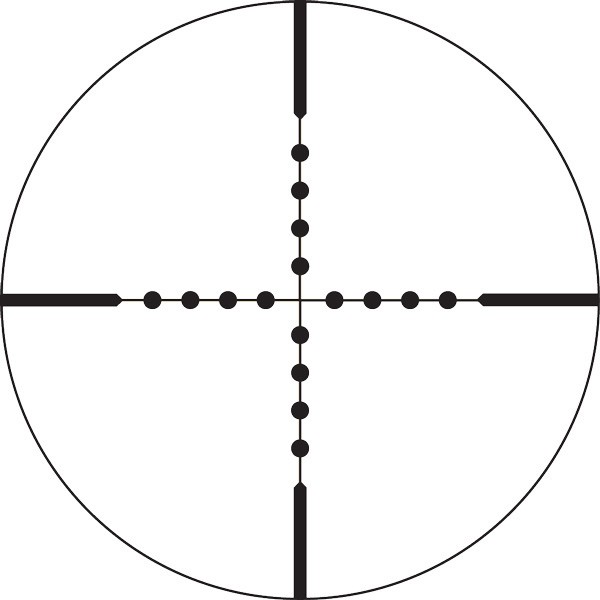
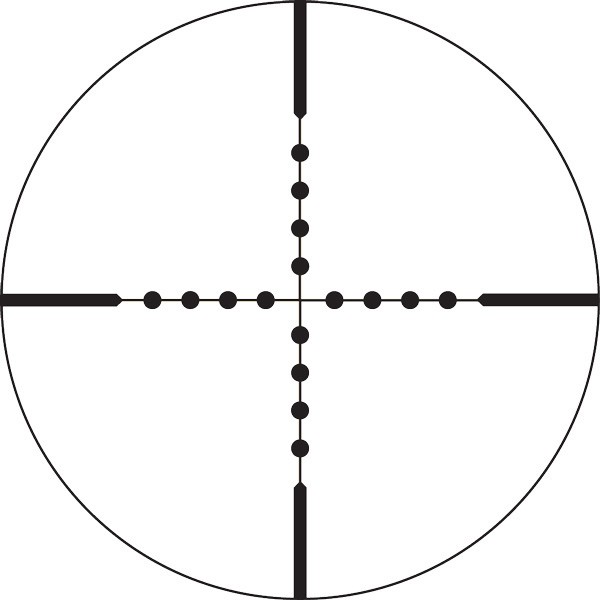
A Mil Dot Reticle
An example of a Duplex Reticle
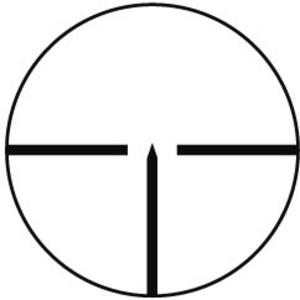
There are a few different choices when it comes to choosing a reticle but most choices come between either a Mil Dot (see image) or a (See image). The Duplex reticle is essentially a centre cross with a thicker outside to help focus your eye towards the centre. Its simple design prevents it from obscuring the target but it doesn’t offer any other measurements to help judge distance or help with your shooting.
A variation of the The Duplex reticle is the Modern Ballistic. This features lines on the bottom of the reticle to help judge elevation for when you shoot above the target at particularly long ranges although this kind of reticle is more common in centerfire and rimfire rifles as they can shoot many times further than a 12ft/lb air rifle. Snipers at the extreme end of the spectrum even have to compensate for the curvature of the earth! Your air rifle is unlikely to be able to cover these distances so in my mind the Modern Ballistic reticle is unnecessary unless you are shooting a FAC air rifle.
The Mil Dot reticle features, as the name suggests, dots across its centre lines that can be used to judge both elevation and windage when shooting. These dots are available at various increments but the idea remains the same. The Mil Dot reticle does obscure more of your vision when shooting but this is compensated for by its increased accuracy.
Hundreds of different reticles are also available but they are either variations of the Mil Dot or the Duplex or wildly unnecessary on an airgun like the German or the SVD, so bear that in mind while selecting.
Mounts
When selecting scope mounts there is one important thing to consider, the size of the scopes body. The majority of scopes will either be 1 inch or 30mm and this will largely determine what mounts you require. If your top rail is shorter, you may require a reach forward mount and higher mounts are available if your rifle features iron sights that are obscuring your vision.
Retaining pins are included on most mounts and are important on everything but airsoft guns, as the recoil from your rifle can cause something known as “scope creep” which is where the scope moves continually backwards and will require constant re-adjusting to remain accurate.
Most mounts fit onto a weaver base and come with Allen Keys for easy installation and don’t forget, here at Pellpax we offer FREE sport mounts whenever a scope is ordered with a rifle.
To Sum Up
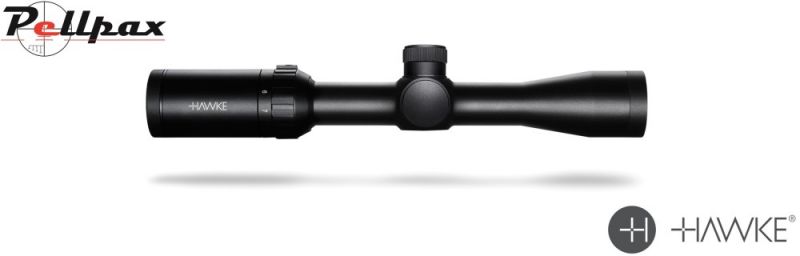
In conclusion, there are many scope available to buy but my personal favourite is the always reliable Hawke Vantage. Relatively cheap, but a truly incredible scope for the money, there is a reason why this little scope has made it onto so many of our air rifle kitsis because we know it does the business. Unless you are looking for something costing the best part of a grand, there are very few scopes that are better for the money.
Shotgun shooting has been a much loved pass time throughout the country for centuries and has developed from a couple of country gents clearing their land into a competitive and regulated sport. Game hunting with shotguns used to be so popular in fact that a 1548 Act of parliament banned “shoting of hayle-shot wherby an infinite sort of fowle is killed and much gaym therby distroyed”. The weapons used in these hunts were often ex military and wildly unpredictable until the invention of the flint lock in the 16th century.
Back then there wasn’t much choice for ammunition as black powder and lead, sometimes stripped from stained-glass windows amongst other things, were loaded directly into the barrel. Nowadays there are many types of shotgun cartridges are available all throughout all of the UK and the various different sports and activities require this different ammunition for their shooters to be effective. A clay is going to need different ammunition from a live goose to be effective for example.
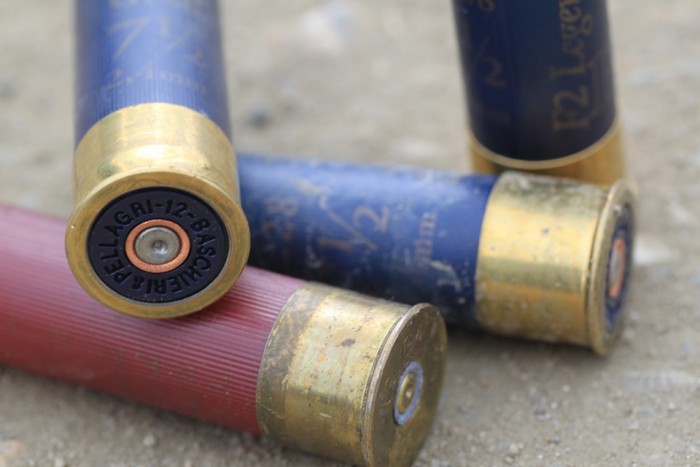
Used cartridge cases
A Shell by its Cover
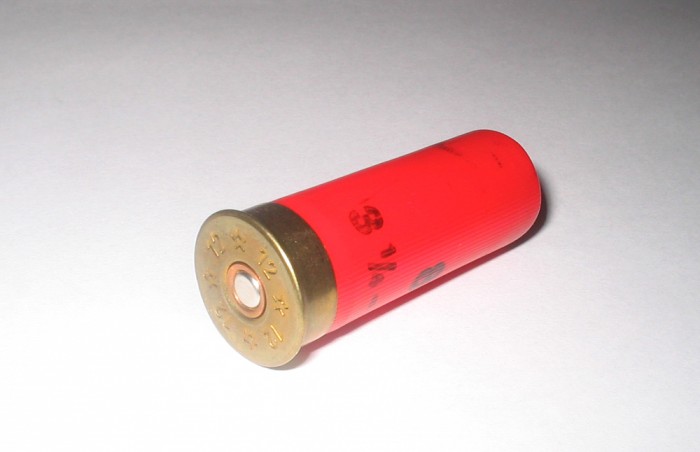
First of all let’s talk about how a shotgun cartridge works. From the outside there appears to be 2 different components to the cartridge, a plastic outer case and a brass head that ends in a thicker rim. The casing is available in various colours which only makes a difference when retrieving cartridges and you are slightly colour blind like me, then cartridges which I am assured are bright red seem to blend in very well with the mud and soil beneath them. Other than that they have no real relevance except some manufactures make certain gauges different colours, for example 20 gauge is often yellow, to prevent accidental misloading, again not much use if you are colorblind but at least I can appreciate the effort.
There is also the brass which is not actually made from brass and is instead electroplated steel. This is why cartridges can rust when not stored correctly. The brass is available in different lengths which is extremely important when you consider that the brass does… almost nothing. Aside from making your cartridges more expensive that is and I guess they look pretty. But modern shells have no real need for a brass, the theory goes that once upon a time brass was required because the powder used in shells burned much hotter than it did today and so, the higher the brass, the more powder used. Today the advantages of “high brass” shells are marketing gimmicks designed to trick new shooters into buying their products, old wives tales and excuses for when a called clay flies past without being shot. Take your pick, I’ve heard them all.
Gauging Interest
Gauge is an old English Imperial measurement that relates the amount of lead that can be rolled down a shotguns barrel to make a set weight, it all seems pretty over complicated so just remember, the lower the number, the bigger the shell. The exception to this is the .410 gauge which is an American invention based on the .45 colt round, Americans just love to be different don’t they? The size of shell does not always equate to power, as shot size and types of power have a part to play, but a larger shell can fit more shot and gunpowder inside it so it is a good rule of thumb to go by.
There are various gauges that are used for shotgun shells which obviously match the calibre of the shotgun you are using. There are 3 often used sizes and by far the most popular of these 3 is 12 gauge, a great all round size that can be used for both clay pigeons and game and provide great versatility at both. Put simply, there is a reason why it is the most popular cartridge. 20 gauge is the next size down from this and is designed to be a similar power level to the 12 gauge but with less recoil. The .410 is the next size down still and only really suitable for the smallest of targets. There are also other rarely used gauges such as 10, 16 and 28 but the majority of cartridges you encounter will likely be one of 12, 20 and .410 gauges.
Generally I would say use the largest gauge that your shoulder can take. The higher the gauge the more pellets in the shell and the the higher chance of hitting your target but also the higher the recoil rate and the more fatigue you will experience, throwing off your aim after a while. 12 gauge is the ideal choice as there is far more variety in shells out there for a 12 gauge although manufacturers of the 20 gauge are slowly catching up. This point seems incidental but I’ve never seen any 16 gauge shells on the shelf in any gunshop I’ve ever been to so if you’re after a quick point and shoot, a more common gauge might be the way to go.
Its what’s Inside that Counts
The inside of the cartridge houses a variety of different ingredients that work together to produce an effective shotgun spread. Starting at the back, there is the primer. The primer is a small piece of metal in the centre of the rim that creates a spark when hit by the hammer of the shotgun. All primers a pretty much the same and do not effect the overall performance of the cartridge.
The primer ignites the gunpowder which is available in a variety of different formulations that burn a different rates. The basic rule of thumb is, that faster the powder burns, the faster the shot is pushed out the barrel. This means that less lead, how far in front of the bird you have to shoot, is required making it easier to hit a fast moving object. Slower burning powders do have an advantage as well however, they often burn more evenly resulting in tighter spreads. You will also feel far less recoil with slower burning powders. Basically, the slower burning powders push the shot out of the barrel more evenly
My personal preference is to choose something mid range siding on the slower side. Just 6m past the end of the barrel, even the fastest loads are travelling at sub sonic speeds and the bigger the shot size, the faster this slowing effect takes place. Basically the speed of the shot makes little difference to the overall performance of the cartridge except the lead required, that’s lead as in distance and not the metal, and shooters who have been at it a long time can counteract this effectively.
Next up is the wad. This little piece of material is what pushes the shot out of the barrel and is primarily to prevent the powder and shot from mixing and to provides a solid base which prevents gas from passing through that shot as opposed to propelling it forwards. This wadding is available in either plastic or fibre. I almost always choose fibre. The reason for this is very simple, plastic is actually slightly the better wad offering better stability and producing better spreads at distance, but the majority of shooting places do not allow it for the simple reason that it is not bio degradable. I only know of one range near me that allows plastic wadding whilst all the rest require that you use fibre so make sure you know where you are headed before you buy.
Shots at the Bar
The last and most important part of choosing shotgun cartridge is the shot. The shot is the balls of metal, usually lead, that is inside the cartridge and are then fired out of the barrel. Although the majority of shot is lead, steel shot is required when shooting water fowl this is to prevent lead from entering any local water supply where its toxicity can be very hazardous to the environment. In steel you will more than likely as need a larger shot size than normal as steel is a harder metal than lead and has a tendency to pass right through the animal without transferring its energy if a smaller shot size is selected.
Also, just to be difficult, steel shot is sized in a different way than lead so bear that in mind when selecting. Be aware your shotgun will need to be proofed for steel shot as the harder metal can damage the inside of the barrel. Almost all modern guns come with this proofing as standard and most older guns can be proofed for a reasonable price.
Cartridge Shot Size
Shot size is probably the most important decision you are going to make and entirely dependant on what you are going to be shooting (see diagram). Smaller sizes, 9 to 7, are more suited to clays and sizes range all the way up to SG or LG, around 9.1mm across, but unless the zombie apocalypse actually happens, it is unlikely you are going to need any shot larger than AAA or BB for even the biggest of targets.
These are really a guideline as we shooters are a suspicious bunch and tend to stick with what works well for us personally. Any shop that tells you the size 7 shot is significantly better than 7.5 because of its greater mass is just trying to shift some old stock. Try what feels good for you, just bear in mind that when shooting live birds, no one likes wounding animals so it is better to go for bigger shot than usual as the higher mass transfers for energy into the target for more one shot kills.
When shooting clays, I generally find smaller shot to be more effective simply because of the fact that smaller shot fit more pellets into a cartridge, for example 210 size 9 pellets fit into a 12 gauge shell compared to just 120 size 7 pellets despite the size difference being just 0.4 mm. It matters less if the clay is “winged” so generally I go for the smallest shot I can get way with for more pellets in the spread and better chance of scoring.
My Recommendations
For Clay Shooting
For clay shooting, you cant get much better than Size 9 Comp X from Hull Cartridge. Voted clay cartridge of the year in 2012, these are fantastic shells with a small shot size for a greater number of pellets hitting your target and tight groupings coming from the slower burning powder. The plastic wadding also enhances accuracy but is not suitable for all ranges.
If you are willing to spend a little more money, the Sovereign Fibre 28g 8 Shotfeature a slightly larger shot size that has been hardened for competition use. This hardening process reduces the deformation of the lead pellets under the extreme acceleration that occurs when the cartridge is fired. This greatly causes much tighter spreads and makes this ammunition the ideal choice for seasoned shooters. The Sovereigns also feature a fibre wad meaning they can be used on any range throughout the country and a re my personal go to when it comes to clay pigeon shooting..
For smaller guns, I would certainly recommend these .410 Gauge Game & Clay cartridges which are some of the best .410 shells I have ever shot. They aren’t going to be taking down albatross but they are suited to game and clay shooting and make ideal practice round thanks to their low recoil.
In the 20 gauge range there are the Subsonic 23g make great clay cartridges thanks to their low recoil, trust me your shoulders will thank me. These are also suitable for younger shooters as their lower recoil is not only less fatiguing but also more forgiving with your aim. They produce reliable spreads for a slower round and provide a large “kill zone” for maximum effectiveness.
Cartridges For Hunting Game Birds
The High Pheasant Fibre 30g 6 Shot is perfect for, as the name suggests, pheasant but also other similar sized birds. 6 shot is the ideal size for a combination of both power and accuracy resulting in less wounded birds and more food on the table. The Imperial Game 28g 6 Shotare of similar size and weight but feature significantly faster velocities if you are shooting particularly manoeuvrable birds. Their wider spread makes the ideal for beginners all the way through to seasoned veterans and should help you dramatically increase your shot/kill ratio.
In 20 gauge some of the best shells I have ever used are the Remington Premier Cartridges which are great all rounders and are superbly suited for shooting disciplines of almost any kind. Remington is a well respected brand name and these shells live up to the promise of quality. They are superbly smooth to cycle and shoot with minimal recoil, saving your shoulder for many shoots
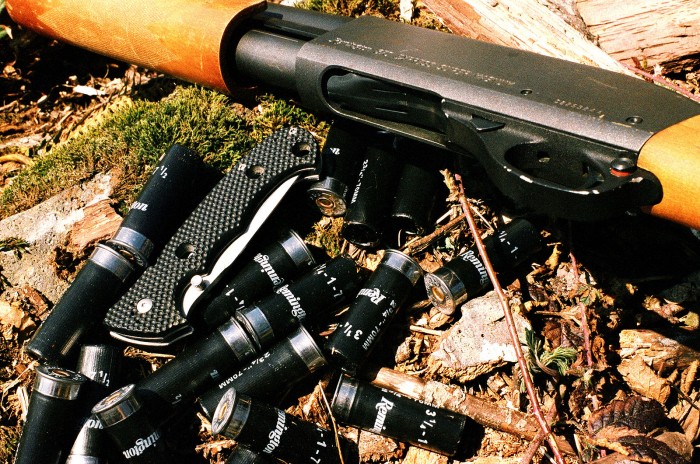
A selection of Remington shotgun shells and the loading port of a shotgun
to come.
For larger birds I would personally recommend the Extreme Hunting 50g BB Shot there is not much on the market that is more powerful than these particular shells. Filled with shot that is around 4.1mm across and with velocities in the region of 1375 fps, hit something with one of these and it stays dead. These shells possess the power to take down even the largest of targets and with their larger shot size ensure all of this energy is transferred into the target for maximum damage and a quick, humane death. It is a good job that these kill with one hit as your shoulder is not going to thank you for being inefficient. It takes a lot of force to move pellets of this size so pack a thick shooting jacket.
Hunting Water Fowl
Where steel shot is required, these Solway Steel Magnum shells are ideal for mallard and other ducks and their larger shot size should prevent the pellets from passing straight through the bird. For smaller water birds, the Steel Game 32g, are going to be ideal and are very reasonably priced, especially when you consider that steel shot can outstrip the price of lead shot, sometimes several times over.
These Pro Steel shells are another cheaper alternative steel cartridge although be aware they do contain plastic wadding and are not suitable for everywhere. They are high velocity shells that decrease lead times making them ideal for faster moving targets and are a great all round shell for someone looking to do a bit of everything.
D.I.Y Your Own Shells?
It is also possible to reload your own shells. Since the price hike in lead a few years back, reloading your own ammunition has never been more popular. Savings of up 60% compared to buying pre made cartridges are nothing to be sniffed at and with todays, modern reloading presses, a surprisingly high level of quality can be achieved. To be able to do this you will first need an explosives license to buy the gunpowder required. Theses are simple enough to obtain for those who already own a shotgun certificate and no extra authorisation is needed for nitro propellants.
Once you have got your license, you are ready to go to work. There are various tools required but favourites of mine are the de- and re-capper which allow old shells to be re-used so you can do do your bit for the environment before you blow it apart.
We stock a variety ofpowders that range in how hot they burn from Korma all the way up to Vindaloo and produce various pressures for shot of all sizes and metals. Sticking with the food analogy, they say there is nothing tastier than food you have made yourself and there is certain level of satisfaction that comes from taking down a pheasant with your own shells. If you can afford all the shooting equipment to get started then it is something I highly recommend, that equipment will pay for itself with in the year, depending on how often you shoot, so think of that initial outlay on the equipment as an investment in your continued shooting success.
To Sum Up
One final note, shotgun shells are made from a variety of different components that can beeffected by environmental conditions such as temperature and moisture so always store them in dry conditions and at room temperature. IE on the floor in the garage is not the best idea, for a variety of reasons.
Perhaps only secondary to choosing your shotgun, the choice of your shotgun cartridges are of the utmost importance. They can have an extreme effect on your shooting ability and at the very least can be your excuse for when you’re having an off day, the one about the lucky underwear gets old fast.
When it comes to specifically choosing your ammunition, I cant really tell what is going to be best for you. Essentially shotgun cartridges are down to individual preference, need and availability so instead of carrying on reading this blog, and well done getting this far, go buy yourself a few shells and get shooting.
The people of Britain have voted to leave the European Union and go it alone.
The pound has slumped, increasing the cost of imported goods. So what does life look like, post Brexit referendum, for businesses like Pellpax?
Many of the products Pellpax sell are imported. Does this mean, then, that Pellpax prices will go up? Apparently not: in fact, they’re going down. I had a chat with Managing Director, Darren Kirk.
What’s going on, Darren? Have you lost the plot?
Well, I agree, it does seem odd. But there really is good reason behind the madness! It’s all to do with passing on to our customers the benefits of Pellpax’s growth.
With two new warehouse units on the point of completion, we now have the extra space to hold stock, meaning that we can buy in larger quantities. The savings we make on bulk purchases will be reflected in the price tags. The fact that we are in a position to expand is down to the thousands of customers who have been loyal to us over the last few years.
But most of these reduced prices are barely above the cost price. Is it really feasible?
I know it sounds crazy. Yes, our margins are now smaller. Yes, we’re now putting lower prices on most of our goods; buying power is certainly one benefit of rapid growth. We aim to deliver products like airguns to your door more cheaply – or at least, at no greater expense – than if you were to buy locally.
The thing is, Hazel, we don’t want our customers to suffer from this political change when it comes to buying from us. Christmas is just around the corner. We want to be able to provide top quality goods at great prices. After all, it’s our customers who have made this possible: without them, there would be no Pellpax.
How will your delivery service be affected?
It won’t be affected, but I am able to lower our delivery charges. As you know, fuel prices have risen quite dramatically, due not only to the weak pound and higher import duty, but also to the simultaneous rise in the cost of oil. However, because of the increasing number of deliveries we do every week, we can actually reduce our delivery charge. Higher fuel costs are absorbed in the sheer volume of deliveries.
Another fantastic advantage of our unique delivery service is that we can always – or nearly always – squeeze in an extra delivery at the last minute. Our six vehicles cover the whole of the UK each week (with monthly visits to Scotland), so one of our drivers will be, at some point, only ten minutes away from any location. This is what Pellpax is all about: it’s about looking after our customers.
Pellpax delivery driver Chris tours the country each weekend.
Do you think that these low prices are sustainable?
They certainly won’t change in the next few months, unless I think I can reduce them further to stimulate further growth. What will happen after January, I really don’t know; a lot depends on the direction sterling takes. But I’m optimistic.
How will Pellpax’s expansion help to keep prices as low as they are?
With the two new warehouses, we’ll have the capacity to hold a wider variety of stock, and in greater quantity, so that everything on the website is always available. This also means that we can order more, but less frequently, from suppliers, reducing delivery costs into our warehouses.
New IT systems, written specifically for us, have improved the automated ordering process, and they also give us better control over inventories. If the excellent service we provide is enough to retain the loyalty and satisfaction of our customers, the result will be long-term low prices.
BSA (or Birmingham Small Arms company) are one of the oldest gun manufacturers in the UK, and throughout their history they have produced everything from firearms to bikes, cars and aircraft, so you can be sure that the standard of engineering that goes into each and every product today is top notch.
Some of the notable firearms that were produced at BSA were the.303 Browning Machine gun, of which they made 568,100 during WWII, and 1,250,000 .303 Lee Enfield Rifles during the same period. Of course, this was a massive help towards the war effort, and set BSA up with the knowledge and machinery to continue making some of the best rifles after the war finished.
A common name in the BSA air rifle range is the BSA Airsporter. The first model was produced in 1948, making the examples left today quite a collectable. Unfortunately that isn’t a model still in production today, but the BSA Meteor is the closest, with the first models being produced back in 1959.
The BSA Guns company which is trading today was purchased by Gamo back in 1986, and since then have been producing a range of air rifles in spring, gas ram, and PCP power plants for the demands of the modern shooter. They have also more recently introduced a range of accessories such as rifle bags, targets, shooting rests, slings and scopes to accompany their air rifles.
BSA Spring Rifles
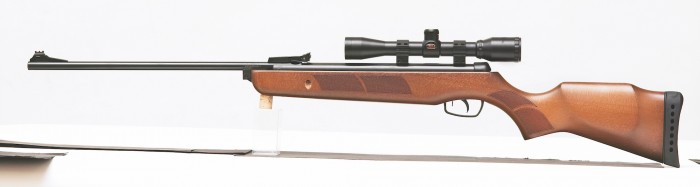
BSA’s spring powered range consists of a few models such as the BSA Lightning, the BSA Meteor EVO, BSA Comet EVO, and the BSA Supersport SE. All are available in both .177 and .22 calibre andare ideal for uses such as hunting, pest control and target shooting.
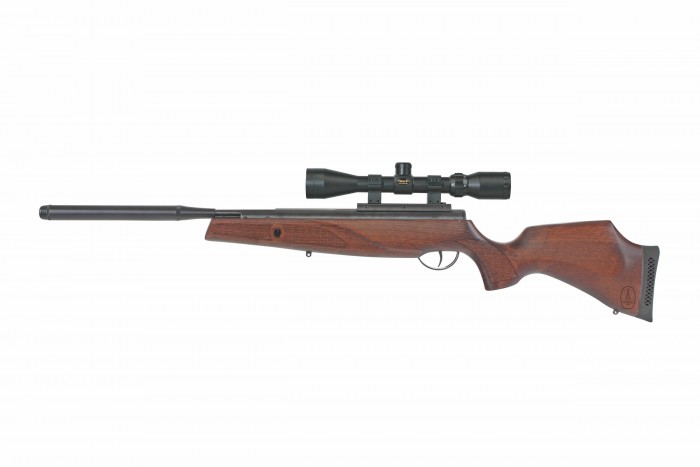
The BSA Lightning is available in a few different models such as the Lighting SE, and the Lightning XL SE. The main difference between the two, is that the SE model has a silencer mounted on the end of the barrel, and the XL SE has a shrouded barrel with a ½inch UNF thread for the fitting of a standard silencer. The XL SE also has a slightly redesigned stock for improved ergonomics. Both rifles feature a Cold Hammer Forged barrel made in BSA’s Birmingham factory for excellent accuracy, and consistent for a wide range of uses.
Here’s a review of the Lightning SE, by Rick Eutsler, of Airgunweb:
Other rifles in their spring range such as the Meteor EVO and Comet EVO are ideal for those on a smaller budget but still looking for a high quality rifle for pest control and hunting purposes. Both rifles are full power output and as such will be capable of humane dispatch at ranges up to around 40 meters. These two rifles are available in a Silentium model as well, which is a moulded silencer fixed to the end of the barrel to reduce the muzzle report when firing which is especially useful for stealthy shooting.
The Supersport SE is one of the more classic rifles in their lineup, and is a standard break barrel hunting rifle, with a sleek appearance and fast handling for those who demand the best from their spring rifle. The stock is made from a high grade of beech, which is finished in a dark stain for a quality look and finish, and fine checkering to the pistol grip and forestock make it perform effortless in both wet and dry conditions.
BSA Gas Ram Rifles
As well as their great range of spring rifles BSA also offer the Lightning in a gas ram rifle. The Lightning SE GRT and Lightning XL SE GRT are the models which incorporate this technology and the benefits over a standard spring rifle are that the power output from shot to shot is more consistent, and the gas ram doesn’t lose power over time like a standard spring, which can suffer fatigue.
The gas ram rifles look identical on the outside to a standard spring, but the insides are greatly different and perfect for those looking for a long term spring rifle that requires minimal maintenance, yet still delivers outstanding results.
PCP Rifles
Of course if you’re looking for the best products in BSAs line-up, then the PCP rifles are the best that they offer.
BSA introduced their first Pre Charged Pneumatic rifle back in 1999, and they have been refining and improving them ever since. Their range is some of the most competitive ones available on the market today. All BSA rifles use the same, reliable 10 shot magazine actioned via a bolt action system for quick and easy reloading.
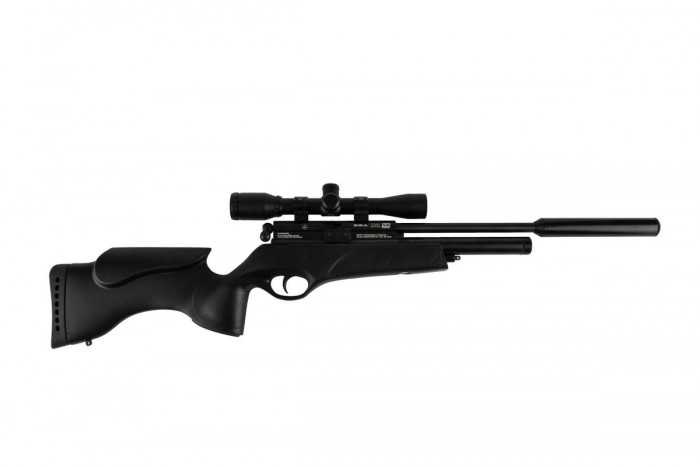
Their base model today starts at the BSA Ultra SE, which is a compact yet high specification PCP that is very lightweight and easy to manoeuvre for both young and older shooters. The rifle has a very short BSA Cold Hammer Forged barrel, which is threaded with a ½inch UNF thread for the fitting of a silencer, and even though it is short, the accuracy is awesome and can land pellets within an inch group at 40 meters, and even better with a bit of practice. The only downside is that as the air cylinder is short, the shot count is around 50 in .22 calibre.
If you’re looking for something with a great shot count, but still just as compact, BSA have recently released the new BSA Ultra XL.
The Ultra XL has a slightly longer barrel and cylinder, a redesigned valve for greater efficiency, and a longer stock along with an adjustable cheek piece to improve shooting comfort. The XL allows around 80 shots in .22, which is much more appropriate for those longer shooting trips, meaning less time recharging, and more time shooting.
A step up from the Ultra is to the BSA Scorpion SE, which has a similar yet elongated stock, and the barrel and cylinder are much longer to increase the shot count to 100 shots per fill in .22. The resulting accuracy is far greater. The barrel is similar to the Ultra in that it is threaded for the fitting of a silencer, and comes fitted as standard with an air stripper. The Scorpion is available in a few different stock options, such as Beech, Walnut, Black Tactical and Camo, so there is a colour and finish for everyone!
The BSA R-10
Moving up from the Scorpion is the R-10 SE rifle, which a fairly new addition to the BSA line up, and is actually a redevelopment of a now discontinued rifle, the R-10 MK2. The BSA R-10 SE is a full size hunting rifle, with a large 200cc buddy bottle to provide over 250 shots in .22 calibre! This makes the R-10 ideal for those long hunting trips where you are often far away from a dive bottle to top it up.
This latest incarnation of the R-10 features a customizable shroud system, so you can have it with the shroud and silencer, or just the silencer to suit your requirements. An improved regulator system also means that it uses the air more efficiently and produces better accuracy over each fill. The stocks come in 4 choices, Walnut, Black Tactical, Camo, and Black Pepper Laminate.
The R-10 is a very impressive bit of kit, but if you’re looking for the flagship in BSAs range then look no further than the Gold Star SE. The action resembles the Scorpion SE, but features a range of improvements such as a new, super-efficient valve and regulator to provide more shots per fill, and unrivalled consistency and accuracy.
The barrel is an Enhanced Cold Hammer Forged barrel for better accuracy and precision, and comes as standard with an adjustable air stripper. The stocks come in 3 options, Red White & Blue Laminate, Black Pepper Laminate, and Walnut and all are finished to immensely high standards for the discerning shooter. The stocks are all multi adjustable and have an adjustable butt pad, cheek piece, and palm rest so you can adjust the rifle to your requirements.
The trigger is an improved match accurate unit which is multi adjustable, and everything is polished and tuned to very high standards for a smooth and enjoyable shooting experience.
BSA: A Quintessentially British Brand
All in all, BSA rifles are very well made in Birmingham in the UK which also assists if any problems should arise with your BSA rifle, although the quality they are made to ensures a very high level of reliability. Whether you’re looking for a low cost springer, or a top of the range PCP rifle, then BSA have something for everyone.







 diner jacket when playing poker with a table full of the worlds villains and holding it I never got the sense of power that I got from the .357. The advantage that the PPK has is a sense of sophistication and style that is more to my personal taste.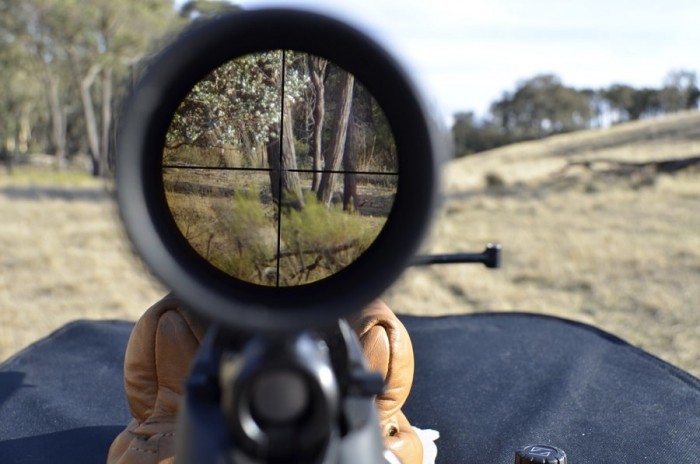

 To Sum Up