A Buyers Guide to Crossbows

There are many different crossbows on the market, so today we’re going to be looking at a few of the very best, and comparing them to see what is the right choice for you.

Recurve Crossbows

First off is recurve crossbows. These crossbows operate much like traditional bows that have been turned sideways and mounted on a stock. The power of the bow comes from the tension housed within the recurve limbs that are drawn back with the string, and which are then released when the trigger is pulled.

Recurve crossbows have been used for centuries, and the advantage of them is that because the design is so simple, they are very easy to maintain and are unlikely to go wrong. Let’s have a look at some examples.

EK Archery Jaguar I

The Jaguar from EK is the ideal starter crossbow. With a draw weight of 150lbs, the crossbow is easy to draw, but will still produce velocities well in excess of 200fps. This means the bolt will fly nice and straight and be accurate enough for target shooting at around 60 yards. The maximum range is obviously much greater – 100 yards plus – but at 60 you should be able to hit a bullseye pretty consistently.

The crossbow is made from a mixture of aluminium and polymer, which keeps the crossbow light, but doesn’t sacrifice any strength. This makes the bow not only easy to transport and carry, but also eliminates fatigue whilst aiming, allowing you to stay more accurate for longer. The only complaint I have about the stock is that the butt is entirely polymer, with no rubber butt pad. This may increase strength, but it makes the crossbow a little uncomfortable to get into the right position.

The bow is equipped with basic iron sights and also sports a rail for red dots, scopes or other optics. It would have been nice for another rail somewhere that could hold a torch, but for the price I really can’t complain. This crossbow is available at £58.99 which is frankly a bargain; it will shoot twice as far as any sub 12ft/lb airgun, and is accurate to a tee.

Honestly, this crossbow is fantastic for the price; it’s just hampered by a lack of options and a slightly uncomfortable design. If, however, you can look past these niggles, you’ll end up with a very effective, if a little basic, target crossbow.


Barnett Recruit 150lbs

At almost four times the price of the EK, the Barnet had better be good to justify itself. Luckily, the crossbow is extremely well made and the build quality is apparent as soon as you pick it up. The crossbow feels both light and strong and is exceptionally balanced, making you want to draw it up to your shoulder almost instinctively.

The crossbow has a draw weight of 150lbs and also 65ft/lbs of muzzle energy. This makes the bow both easy to draw and also powerful enough to provide good range. The crossbow has a fantastically responsive, moulded metal trigger that houses a predictable let off that helps prevent you from “pulling” your shot.

In addition to the crossbow, the Recruit comes with a lightweight bolt quiver, three bolts, lube wax and even a red dot sight. There are much better quality sights available, such as the models by Hawke or Meopta, but to have one included with the bow is a nice touch. The bolts included with the bow are also not of particularly high quality, and, to be honest, the accessories included would be something I’d replace if I was using this crossbow day in day out.

The bow is also equipped with an anti-dry-fire system to prevent the most common way of bow breakages, and this makes the bow feel very reliable. The crossbow is able to achieve around 2” groups at 50 yards, pretty impressive, and I’m sure with a little training you could maybe get this up to 70 plus.

The Recruit is a good bow and definitely a step up in quality from the Jaguar, I don’t think it’s four times better though, especially when it comes to accuracy and power, which are almost identical.

Compound Crossbows

Compound bows use twin cams at the end of each limb to a) increase the bow’s power and b) to prevent tension being stored in the string when the bow is drawn, which minimises the risk of dry fire and breakages. Compound bows tend to be more expensive than recurves and take more maintenance.

EK Archery Blade

The Blade, from EK Archery, is their entry level model in the compound bow market, and is ideal for those looking for maximum power from a minimum price. The Bow comes with all the accessories you need to get started: 4×32 crossbow scope, cocking rope, 3-bolt quiver, 3 x 20″ aluminium bolts, and string wax, consequently making this crossbow a perfect choice for beginners.

I would advise against younger shooters using this bow, however, as even with the cocking rope provided, the Blade takes a fair effort to cock. Not too hard to be impossible, but one of those ones where everyone says they find it really easy, but you can see their face going a bit red and a few beads of sweat forming after each shot. No one likes to admit defeat, I guess. Now in and of itself, this is not much of a problem, but in younger hands I could see this leading to a dry fire if the rope isn’t cocked fully.

The blade has an extendable, M4-style stock that makes it suitable for people of all shapes and sizes, and the level of comfort has been greatly improved over the Jaguar with a moulded shape that fits neatly into the shoulder. The crossbow also shoots incredibly well. I’m impressed with EK’s ability to produce great performance from such inexpensive bows. The Blade is responsive and manoeuvrable in the hands, and will deliver tight and effective groupings at ranges of up to 60 yards.

A great starter crossbow that includes everything needed for a beginner to get into their shooting hobby.

Barnett Edge

The Edge is a serious piece of kit. One of the first things I noticed was how easy it was to cock. With a draw weight of only 135lbs and the bow’s cam’s greatly reducing tension on the string, the Edge is quick and easy to load up. Even after 20 or so shots, the Edge was nowhere near as hard on my arms as the Blade, and this will keep your aim straighter for longer.

This doesn’t mean that the crossbow is lacking power, however, and the Edge will produce a whopping 110+ ft/lbs of muzzle energy. Yeah, quite a bit more than I expected, to be honest. This makes the Edge absolutely in a league of its own when it comes to range, and the added power also helps keep the bolt straight in flight, adding to the crossbow’s accuracy. I have heard reports of the riser being slightly off centre with some crossbows, which makes them difficult to sight in, but my model was absolutely fine. I seem to have pretty good luck when it comes to these things.

The crossbow comes equipped with a variety of safety features, such as an automatic safety and an anti-dry-fire mechanism, and the crossbow also has all the usual accessories. The scope, in particular, is fantastic; it’s 4×32 with excellent clarity and coated lenses to help maximise light transfer in low light. It is certainly a step up from the plain tubes included with less expensive models.

Speaking of expense, the Edge is the most expensive crossbow I’ve tested here – by some margin as well – and I’m not really sure what it does to justify its price tag. It’s nice to shoot, sure; it’s easy to cock; and it’s very accurate. But actually, so is the EK, which is a fraction of the price. The build quality is good, but not exceptional, and although I was impressed shooting the bow, I would think long and hard before buying one for that amount of money.

Pistol Bows

These are like regular bows that instead of needing to be shouldered can be fired from a pistol grip. These bows are typically less powerful, though still more powerful than an airgun, and also smaller than a regular crossbow. The majority of these will feature recurved limbs, although there are a few compound pistol crossbows sneaking onto the market.

EK Cobra

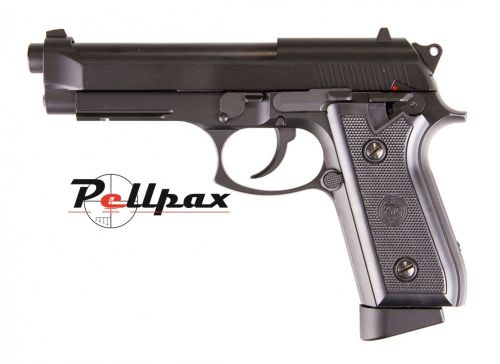
The EK Cobra is perhaps the most popular pistol bow we sell, and the reason for this is clear: the whole bow costs just £17.99, including bolts.

The pistol bow is incredibly easy to cock, and features an ingenious system that pulls back the string by pressing a button and moving the stock back, which pulls two metal hooks backwards, cocking the crossbow. This system is great, as it’s easy to use and eliminates the need for fiddling around with the bow’s small strings; and it also prevents dry fire. In fact, it’s such a good system, I can see it spreading to other pistol bows if EK haven’t patented it.
The Cobra has a draw weight of 80lb and shoots exceptionally well for its size. The bow is equipped with iron sights that are adjustable, but there’s no rail for external optics. The bow is also equipped with safety, which must be pushed forward to fire, and the trigger of the bow is machined metal for added durability.

All in all, this pistol bow is very well equipped, and I can’t get over how cheap it is. At under £18, this crossbow is cheaper than half a tank of petrol or a meal out with the missus, and will be infinitely more fun than either of these. Honestly, this pistol bow is great, and, for the price, is one of the most fun items we sell.

Hopefully this has given you a few options to consider. Personally, I like the Cobra as it is still pretty powerful for a pistol and it is just so cheap!

Steph

Pellpax Girl, Amy Brown, Prepares for the Cyprus Grand Prix

Pellpax is extremely proud to be sponsoring the world-class Olympic Skeet shooter, Amy Brown. Amy has already competed in international competitions in Holland, Serbia, Málaga, Malta, Finland, and the UK, and is now in training for the Open Cyprus Grand Prix in February 2018. I caught up with Amy to find out what’s going on in her hectic life!

Having completed a foundation Law degree at Northumbria University, in Newcastle, Amy is now embarking on a course in Mechanical Engineering. Juggling higher education with a sporting career isn’t easy (yes, that’s a massive understatement!), but Amy’s tutors have always been sympathetic to her athletic commitments, and this support from Northumbria University has been extended to a shooting scholarship. Next time, we’ll find out more about this.

Amy’s training consists of regular sessions at the university gym, in order to build and maintain upper body strength and stamina. She follows a strict high-protein, moderate carbohydrate diet, balancing muscle-building with sustained energy levels. For shooting practice, Amy divides her time between Beverly Clay Target Centre in East Yorkshire, Bywell Shooting Ground in Northumberland, and Auchterhouse Shooting Ground in Dundee, Scotland, where she receives instruction from her coach, Iain McGregor.

One of the ways in which Pellpax assists Amy is to supply cartridges for training. At the moment, she’s using Hull Pro One Cartridges, a high-performance product that has been selected as the Olympic training load.

“They’re fantastic pellets. They just feel really good.”

The 2018 Open Cyprus Grand Prix will be held from February 4 to February 12, in the Cypriot capital, Nicosia. As the largest airgun competition in the world, and the first international competition of the year, it’s a popular, well-attended tournament. Amy will be competing in the senior ladies Olympic Skeet event.

“Cyprus is one of the largest open competitions in the world. Everyone from Olympians to world cup medallists go at the start of the year to see where they are at, at the beginning of the season.”

In addition to furthering her own career as a world-class competitor, Amy works with her younger sister, Erin, as co-ordinator of a ladies’ and girls’ shooting club. Proceeds from monthly meetings are donated to charities such as Bloodwise, an organisation striving to defeat all 137 types of blood cancer, and the Great North Air Ambulance.

Whatever is going on in the present, or in the near future, Amy never takes her eye off the 2020 Tokyo Olympic Games. The qualification process will begin at the end of 2018, and Amy is determined to be part of Team GB.

Do well in Cyprus, Amy! From everyone here at Pellpax.

Pellpax’s Unique and Unrivalled Delivery Service: How it Works

A friendly company with a professional approach … Great friendly service, good communication … A rare breed of online business with full traditional personal telephone service.

These are a few of the many positive comments from Pellpax customers, reflecting the efficient and reliable delivery service that’s unique to Pellpax. You may have been on the receiving end of this delivery process, or you may be considering a first-time purchase. But have you ever wondered how it all works?

Legislation has always stipulated that shotguns, rifles, and associated ammunition are sold on a face-to-face basis by a registered firearms dealer (RFD). There is now a law that requires all air guns and silencers to be sold under the same conditions. As a registered firearms dealer, Pellpax has a legal requirement to deliver these products, in person, to the customer; items that don’t fall into this category, such as pellets and clothing, are dispatched immediately, by courier, and will be delivered within a few days.

Every weekend, Pellpax’s fleet of vehicles sets out to deliver to households all over England and Wales. Between Friday lunchtime and Tuesday afternoon, Pellpax drivers will have visited up to 300 addresses, and it’s not uncommon for one driver to cover more than 1,000 miles. This huge task is achieved by putting into practice the teamwork and open communication that sets Pellpax in a class of its own.

Having taken an order, the sales team will mark the delivery location on a map of the UK, using colour-coded pins. The IT department provides information for the customer, using sophisticated software that can calculate routes and the approximate intervals between drops – assuming that a driver doesn’t lose his way! This can happen, of course, and so can delays caused by roadworks, accidents, and traffic congestion.

In these cases, the driver will make a phone call to the customer, with an apology and an explanation, and will provide a new estimated time of arrival. In a case where the time cannot be made up, the driver will also contact the customer next on the list. The Pellpax driver will always keep customers informed regarding the time of their delivery.

If your order is placed before midday on a Tuesday, it will be delivered to your door between the Friday of that week and the following Tuesday. An order placed after midday on Tuesday might still be dispatched for delivery three days later, or it may be delivered during the following weekend, depending on your location. In all cases, though, Pellpax staff will keep you up to date with information, and if you have any queries, they will be pleased to help.

Friday noon is a busy time at Pellpax headquarters. Every item has already been double-checked; all guns have been assembled, zeroed in, and tested, so they’re ready to shoot when you take them out of the box; and each package has the customer’s name written clearly on it. The packages are loaded into the vehicles in reverse order of delivery, locked in safely, under the eye of a security camera. Each driver takes with him a folder, containing all the paperwork for each delivery, and taped to the front of the folder is Pellpax’s Certificate of Registration as a Firearms Dealer.

When a driver sets out, he programmes the post code of the first drop into the satnav and checks that the estimated arrival time displayed is approximately the same as that shown on the paperwork. After each drop, the driver enters the next post code, and so the process goes on throughout the weekend. Because Pellpax has a policy of personal service, intervals between drops are calculated with the inclusion of a considerable period of time for customer care.

Pellpax drivers are not just couriers, but are an integral part of the team, working closely with all other departments. Like all members of the Pellpax staff, drivers are knowledgeable about the products they deliver and about the sales process. In the event that a driver is ill, and unable to work, it is not unusual for a staff member from another department to take on the role of driver for a weekend.

Here are some more comments from Pellpax customers:

Great delivery driver, so helpful, kept me updated on when and what time my delivery was coming … Another perfect delivery from Pellpax, on time as usual, would recommend 100%.


What is an Air Gun?

Many of you will think of an air gun as anything that fires a projectile from a smooth-bore or rifled barrel using the power of air.

This is the standard definition that can be found across the internet. But air guns are so much more than that today, as some use compressed air, others CO2 gas, and some a spring and piston, which still all come under the umbrella of air guns. As a rule of thumb, the term air gun is generally used to refer to any type of gun that uses compressed gas as the propellant, as opposed to burning powder, as in rifles and shotguns. And you should always consider the right air gun pellet for your needs as well.

Spring Power

Probably one of the oldest air gun mechanisms to still be around today is the spring-and-piston type, with the first examples of their existence going back to the late 1800s.

The principle of a spring-powered air rifle is that a spring is cocked by means of a lever; it’s often the barrel that doubles for this job, but some guns are a side- or underlever type, which allows the barrel to be fixed in place. This lever then compresses the spring, which has a piston in front of it, with a washer on the front. This washer used to be made from leather, but today they tend to be made from plastic. This washer creates a near air-tight seal, so that when the spring’s tension is released, the piston compresses the air in front of it, which is then forced through a port into the barrel, propelling the projectile forward.

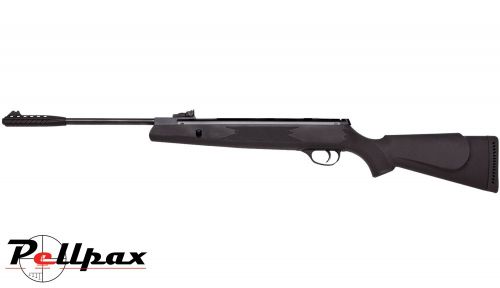
The Stinger Starter UL Tactical Kit is a great spring rifle for target shooting and plinking.

As this mechanism has very few moving parts, it’s probably the most reliable type of air gun, especially as so many models from nearly 100 years ago are still working flawlessly today!

One slight downside of this system is that the spring wears over time, causing power loss, but a gunsmith can easily replace the spring to get the power back up to where it should be. Spring air rifles come in a wide range of prices from choices such as the Stinger UL Tactical Starter Kit .22, right up to the top-of-the-range, state-of-the-art Air Arms Pro-Sport Walnut Stock .177, which offers some of the best accuracy and consistency straight out of the box.

Choose from the best Spring Powered airgun brands

Gas Ram

An upgrade on the standard spring airgun is the gas ram system, which is very similar in its principles to a spring air rifle, except the spring is replaced with a gas strut. For those of you who can’t picture a gas strut, it’s basically a larger version of what holds a car boot open. The gas strut doesn’t suffer the same downfalls as a spring does, such as spring fatigue, meaning that the power stays the same for longer. The gas strut also offers better shot-to-shot consistency, as the compression of the gas is more consistent and accurate than that of a spring would be. Again, prices vary in the gas ram range, from the e Webley VMX D-Ram .22 – Black Synthetic, right up to the Weihrauch HW90K .177.

Choose from the best Gas Ram powered airguns

CO2 Powered

The next step up from spring and gas ram air rifles are CO2-powered rifles, which use either the small 12g capsules, or the larger 88g cylinders. Both are filled with compressed CO2, and once loaded into the rifle, the gas flows through a valve, eventually being released into the barrel to propel the pellet when the trigger is pulled and the hammer strikes the valve. This system is completely recoil-less, so it’s a lot easier to get better accuracy with one of these rifles straight out of the box.

CO2 does have its disadvantages though, as it’s very dependent on temperature, so it’ll be a bit more powerful on a warm day, but less powerful on a cold day. Spring and gas ram don’t experience this fluctuation by comparison. CO2 are a lot quieter though, as they don’t have much internal movement going on, so with a suppressor fitted, they are close to silent.

Choices start from the Rat Sniper .22 CO2 Air Rifle, which is a great rifle for those looking for a bit of target shooting and light pest control, up to the all-bells-and-whistles Umarex 850 Air Magnum XT .22 Deluxe Kit, which offers multi-shot, full-power shooting.

Choose from the best CO2 powered airguns

PCP Powered

The Zbroia Hortisia Bolt Action PCP Rifle is an excellent starting point

PCP (pre-charged pneumatic) rifles are the next step up from CO2 and offer the best in accuracy and consistency out of all the airgun types currently on the market.

PCP rifles use high pressure air – some running at pressures of up to 300 BAR – to propel the pellets along the barrel. The advantage of high-pressure air is that it doesn’t change power as the temperature varies, and is also a lot more stable than CO2, giving much better results when firing pellets. The principle is similar to the workings of a CO2 gun, with the air held in a reservoir, which is recharged via a diving cylinder or a stirrup pump. This air is then released into the barrel via a valve, which is struck by a hammer when the trigger is pulled.

PCP rifles are available in all shapes and sizes, with both single-shot and multi-shot actions available.

Some good starting points would be the Zbroia Hortitsia .22 – Black or the Daystate Griffin .177, with prices varying anywhere in between, depending on your budget!

Choose from the best PCP Powered airguns

An airgun is not just a gun that uses air to fire pellets. It’s much more than that today, with some top-end rifles even utilizing electronic actions to fire the pellets! There are still many new advances to come, but I hope this blog post has helped explain some of the different types.

High Powered Air Rifles for under £200

In these times of Brexit and Trump, it seems everyone’s looking for a good deal. So I’m here to shed light on some of the best that cheap air rifles have to offer. Now, just 60 years ago, £200 would buy you a brand-new car, but cars are not necessarily the most efficient tool for pest control. So let’s see what high-powered airguns we can get for the same price. And you should always factor in the importance of choosing the correct air gun pellet too.


Hunting For Value: Remington Express XP

If you’re looking for value, you can’t do better than the Remington Express XP. It’s not just one of the cheapest spring rifles, but it’s one of the cheapest airguns, period. The express is only available in .177, but it will shoot 11.5ft/lbs plus, making it just as effective as many other more expensive guns on the market.

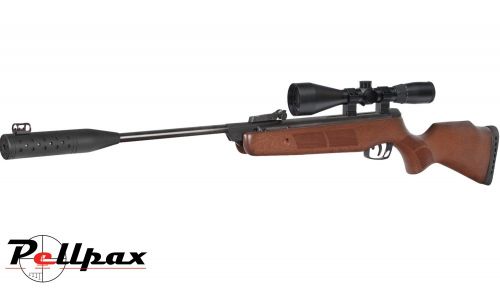
The finish on the rifle is also surprisingly refined, considering the price, and the hardwood stock (read ‘not beech’) is suitably shaped and well stained. The rifle also weighs under 3kg, making it lighter than some other similarly priced spring rifles. The trigger of the Remington, in particular, is nice and wide, and whilst there’s a little creep, the pull weight seems perfectly set to achieve a predictable let-off. The Remington is also accurate, with 1/2” groups at 30 yards, using Air Arms Diabolo pellets, and the muzzle report is greatly reduced by the addition of a silencer.

This rifle, however, is not as quiet as a CO2 or PCP rifle, as the main noise of a spring rifle comes from inside the rifle itself. Also, the silencer is moulded to the front of the rifle, eliminating the possibility of front sights. Now, the rifle does come with a 3-9×32 scope, but it’s always nice to have the option.
All in all, a great rifle that’s limited by its lack of options, such as calibre choice and sight options.

Great finish on the XPs stock.

Summary:
+ Great finish
+ Accurate
+ Brilliant Trigger
+ Comes with Scope

– Silencer is Fixed
– .177 Only
– Still Quite Loud

Lightweight and Reliable: Webley VMX

Next up is rifle that has had a couple of re-brands over the years, the Webley ValueMax, now known as the VMX has been a popular choice amongst airgunners looking to get more bang for their buck.

Slightly less powerful than the Express XP, the VMX none the less shoots at around 11.3ft/lbs which is more than enough to deal with either feathers or fur. The VMX features a Powr Lok mainspring that delivers consistent power and smooth delivery although the two stage trigger could be of higher quality.

The VMX also features fibre optic sights and can be fitted with a scope because of the rifles top mounted rail. The VMX also features an automatic safety, but is not possible to de-cock the rifle without firing so always ensure you have a target first, something that is good practice anyway.

The synthetic stock is OK I guess, but I’ve never liked the feel of most of them, they remind me of the texture of a cheap car dashboard, but they are light and I guess for £120 I cant exactly expect walnut can I? The shape is good however and the rifle is comfortable to shoulder for both left and right handed shooters.

The rifle is maybe not the nicest to look at or shoulder, but it shoots like a dream and for under £120 you can’t really have many complaints can you?

Summary

+ Smooth Action
+ Fibre Optic Sights
+ Under £120!!!
+ Auto Safety

– Ugly Synthetic Stock
– Moderate Trigger Creep
– No Way to Decock

A Man’s Gun: SMK XS38

Webley Valuemax VMX Air Rifle .177

The Chinese have, in recent years, shaken off their reputation for the cheap and the nasty, and instead are now famous for making some of the most reliable air rifles that money can buy.

Continuing in that tradition, the XS38 is a full-sized, full-power airgun, which, instead of a break-barrel system, utilises an underlever to cock. This reduces wear and increases accuracy by ensuring the barrel never moves throughout the firing process. The rifle is fitted with a scope rail as well as fibre-optic sights, which aid hunting in low light.

The rifle itself is somewhat heavy, weighing in at nearly 4kg, and under-leavers are notorious for having all their weight at the front – something that will take a bit of getting used to. The rifle does have a fair bit of kick, though this is counteracted with a generously sized recoil pad.

The trigger of the XS is somewhat unrefined and is a single stage, leading to a little unpredictability, and the break-barrel action is a little stiff, so you’re in for a workout if you’re going to be doing a lot of shooting with it. It was the most powerful of all the rifles I tested, clocking in at 11.8ft/lbs, ideal for pests.

The XS38 is definitely excellent value, but it’s very front heavy and a bit cumbersome to aim. The gun does, however, pack a real punch, and it’s accurate enough for targets or pests.

Summary

This silencer is not removable

+ Under lever
+ Fibre Optic Sights
+ Great Finish
+ High Power

– Unpredictable Trigger
– Heavy
– Tough to Cock

[This silencer is not removable]

Built to Last: BSA Meteor EVO Silentium

The BSA Meteor Silentium was originally introduced in 1955, over half a century ago, and we are now on our 7th iteration of this famous gun. BSA, and now Gamo, who took over in 1986, have always adopted an “if it ain’t broke, don’t fix it” approach to the Meteor, and consequently have ended up with a rifle that’s very old fashioned, not to mention underpowered. It’s really only suited for purists of the brand, looking to reclaim a bit of the past.

Now, however, they introduce the Meteor EVO, a version of their classic rifle that has been given a firm boot into the 21st century. First thing to note is the power: upped from the original’s 8ft/lb, the EVO features a brand-new spring-and-valves system that will produce around 11ft/lbs of muzzle energy, just under the legal limit.

The EVO, much like its predecessor, is a rifle that’s built to last, something that continues to impress me about the brand. The finish of the EVO is also really good, with chequering on the stock and a thick rubber recoil pad. Testing the gun out, 4.52 Air Arms field pellets gave tight groupings at 30 yards, and I’m sure that, with a bit of experimentation with pellets, this could be improved further.

Also, unlike some previous BSA models, like the Lightning and the Supersport, the Meteor features a barrel fulcrum that consists of a threaded screw instead of a pin, which eliminates the lateral barrel movement that has given this brand a bit of a bad rep in recent years.

The only real complaint I have is that the gun is still pretty loud – and yes, I know all spring rifles have a similar problem, but don’t call your gun a Silentium if it gives away my position to everyone within a mile radius. Also, this silencer can’t be removed and replaced with a more effective one, or one that doesn’t look like a giant piece of plastic. Oh well…

The BSA carries a lot of heritage. It also shoots well … even if it’s a little loud and cumbersome to aim.

SummaryBSA Meteor Evo Silentium Air Rifle .177
+ Great Build Quality
+ Well Designed Stock
+ High Power
+ Accurate

– Quite Loud
– Can’t Remove Silencer
– Front Heavy

Best Gamo Ever: Gamo Whisper X

The Gamo Whisper X has been billed as “the best Gamo ever”, and while that doesn’t mean much to some people, the Whisper X does shake off some of
the baggage that’s been attached to the Gamo name. Normally known for having a heavy trigger, the Whisper is surprisingly light and responsive, and I found myself growing to like it more with each shot. The accuracy was again pretty good, inside a penny at 30 yards. Nothing to complain about here.

Another thing Gamo rifles were famous for was the “twang” noise the spring made when fired. Now, I don’t know if they use a different manufacturer for their springs now, but that noise was absent, instead being replaced with a more pleasant thud sound. The recoil level of this rifle was also way below what I expected in the shoulder, with the skeleton stock absorbing a large part of it. However, the kick is still larger than most air rifles, and I wonder if this may cause damage to the gun in the long run.

About that stock: it’s not exactly my cup of tea. I have to say I prefer a classic sporter-shaped wood stock, as opposed to the Whisper X’s unusual styling. At least it doesn’t look like a Kral Breaker … Having said that, looks are subjective; one man’s trash is another man’s treasure, blah blah blah … Really, if you’re hitting groups as tight as the X does, how it looks pales into insignificance.

The X was perhaps the gun I was most sceptical about before shooting, and yet it was the one that grew on me the most.

Gamo Whisper X

The Gamo has an unusual thumbhole design

+ High Accuracy
+ Light
+ Comfortable
+ Improved noise…

– … but not exactly Whisper Quiet
– Fixed Silencer
– Polarising looks

The Gamo has an unusual thumbhole design

And the Winner is …

In conclusion, I must say that I was pleasantly surprised by this range of rifles. The build quality is about what you would expect, but the performance far exceeded my expectations. With the exception of one, all were over 11.5ft/lbs, and all were accurate enough to be used for either pest control or target shooting at ranges up to, and including, 30 metres. If I had to pick a winner, I’d probably go for the Remington. Yes, it is a bit rough around the edges, but that trigger is great and makes the gun a joy to shoot. I would have liked the option of front sights, such as on the non-XP model, but this gun is a great choice for target shooters and hunters alike.

The overall standard of the guns was actually very good. Manufacturers have been competing with each other for decades now to try and get their rifles to be the most affordable, and there’s now more choice than ever. Whereas 30 years ago buying a cheap airgun was really scraping the bottom of the barrel, nowadays the bar has been raised so high that you can find a great airgun, regardless of your budget, so long as you’re prepared to compromise.

Pistol Pest Control

Pistol Pest Control

There is no doubt that summer is prime season for pests but it is by no means the only time that pests are around so you need to be vigilant. Rats, unlike many other mammals, do not typically hibernate during winter and as the temperatures drop, they are more likely to be looking to move inside looking for warmth and shelter. This means that they will appear inside barns and garages where range is not so much a factor as manoeuvrability and ease of use.

When choosing a hunting pistol it is important to ensure that you have a pistol that shoots as close to the 6 ft/lb legal limit as possible. Careful consideration must be paid to ensure quick dispatching and the more powerful the gun, the more stopping power the pellet has. A 2-3 ft/lb 1911 is just not going to do the job humanely or otherwise.

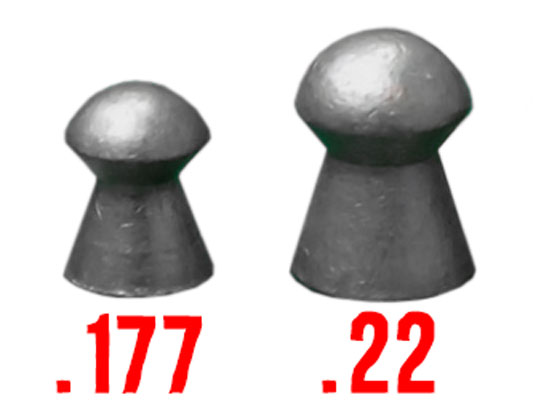
There are two main airguns gun calibres .177 and .22. There are others but they are either too heavy for 6ft/lb guns and often more difficult to get hold of. So what is better .177 or .22? Sigh… this is an argument as old as time but here goes :

Relative size of the 2 most common calibres.

Well, .22 is often cited as the “hunting calibre” but, with the right shaped pellets, .177 can be just as effective. Due to power being worked out as a relationship between weight and speed the lighter pellets of the .177 calibre actually fly much faster than their heavier counterparts. This becomes an advantage as their trajectory is much flatter and therefore it is easier to be accurate. Hitting the head or vitals of a rat or small bird means shooting an area the size of a pound coin and so I actually prefer .177 for pistol pest control. As .177 pellets are travelling faster domed or pointed pellets have a habit of passing though the target which not only reduces lethality but can be problematic if shooting without a clear backstop. For this reason I would recommend flat head or hollow points for .177 and domed pellets for .22. That is my case for using .177 calibre anyway, but I have plenty of friends that swear by .22 especially for furry animals such as rats and rabbits which tend to be quite tough.

At the end of the day every hunter will tell you that accuracy is the most important factor when it comes to humane dispatching, you are often aiming for an area no larger than a pound coin so as long as you can reliably hit that, you will be fine. Just pick whichever calibre you prefer, it IS that simple. With that in mind, perhaps the most important aspect of pest control is practice, reliably hitting the same spot with a rifle is hard enough, but with a pistol it will require hours and hours of hard work until it is in your muscle memory. There are some people that will tell you that you hunting with an air pistol is inherently impossible to do humanely but I disagree, reliable expansion occurs at around 4ft/lbs, even less in hollow points, and a pellet that is fired from 6ft/lb air pistol will have this level of energy at ranges of around 15m.

Which Type of Air Pistol?

So you have your calibre, now what to choose, spring? CO2? Gas Ram? PCP? Single stroke? At least there was only 2 calibres to choose from…

Well, using my uncanny ability to treat my own opinions as fact, I’m going to trim the list down a bit. PCP pistols are undoubtedly effective but you are talking minimum 700 English pounds for a good one and that’s without factoring in the dive bottle and hose that you need to have one and that is probably too much money for a couple of rats so, unfortunately, they’re out.

Gas Ram pistols are essentially the same as spring pistols but use a non fatiguing piston system instead of a spring, sounds great right? Well, to my knowledge there are none close to the 6ft/lb limit that we are after so they are also out. Multi Stroke pistols suffer a similar fate with the majority of the models available being under powered with one exception. The Zoraki HP-01 has a variable power system which means that after 3 pumps the pistol will be powerful enough to be used for pest control. This means that having the pistol ready to shoot as by the time you have pumped the pistol up to full power, the rat or bird will likely be gone.

So that leaves us two viable options CO2 and spring power. As they are the most popular, let’s talk CO2 first.

CO2 pistols

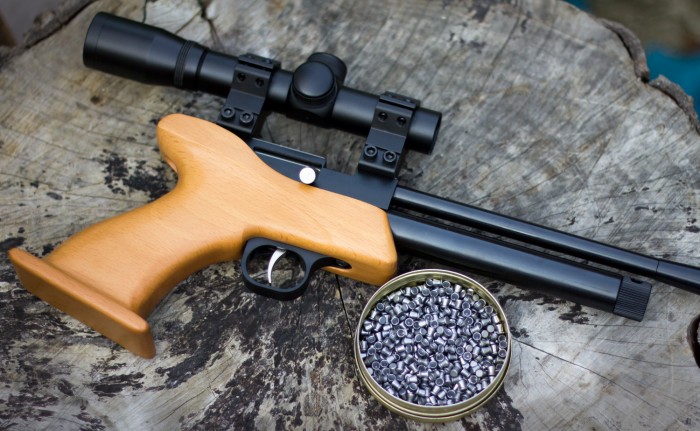
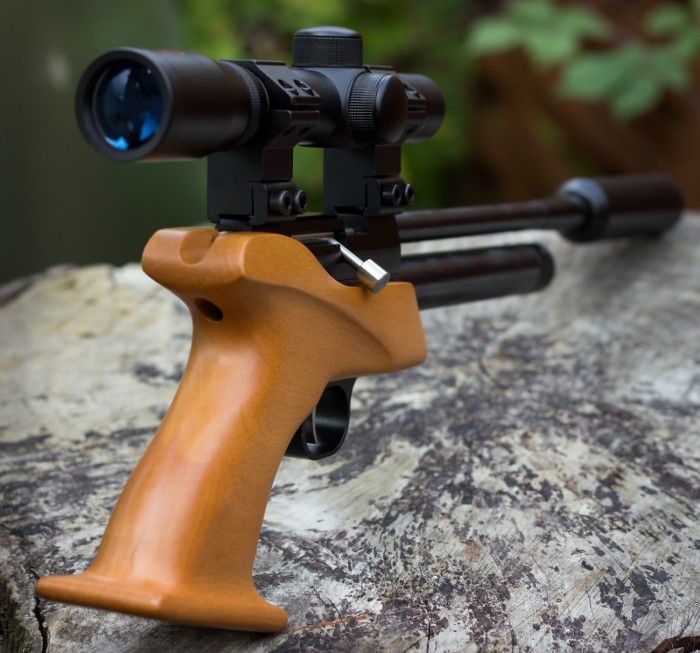
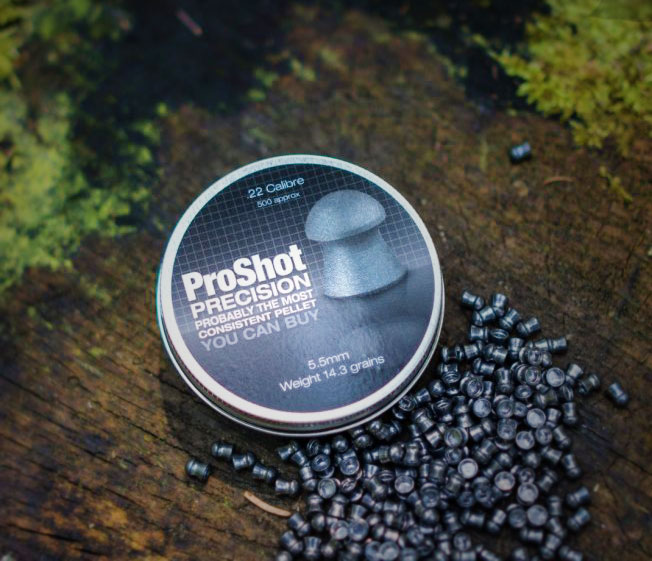
The ProShot Pro-Target

There are a wide variety of CO2 powered pistols available that come in all shapes and sizes but for the majority, there are only a couple that are capable of killing. And the majority are based on one tried and tested design. The originator of the full powered air pistol is a model called the Crosman 2240 Buster which utilised an ingenious bolt action design that was powered by a single 12g CO2 capsule that produced around 5.5ft/lbs of muzzle energy. The 2240 stood as the undisputed king of the pest control world for a long time until a new design came along and took its crown.

The SMK CP1 has refined and ungraded the 2240s original blueprint and has become not just one of the best selling pest control pistols, but also one of the best selling airguns currently on the market. What makes it so effective is not just the power, but also the refinements made to the gun, the bolt has been moved to the left side to allow easier cocking, there is a chequered wood stock instead of the 2240s polymer and both the trigger unit and iron sights have received a significant upgrade. The CP1 also features a dovetail rail for the fitting of external optics and comes in a wide variety of calibres for maximum versatility, there is even a multi-shot version available. When looking for a pest dispatching pistol it is very hard to look past this model.

See more CO2 air pistols

Spring Powered Pistols

Spring powered pistols generally utilise a break barrel or lever system to fill a chamber with air and then release a spring which rapidly compresses the chamber forcing the pellet out of the barrel. The advantage of this design is that everything you need to fire is right there in your hands, no external gas canisters are required so if you can cock the gun, you can shoot it. This does also mean that unfortunately all spring pistols are single shot but with Gamo bringing out an ingenious multi shot spring rifle, the Maxxim Elite, I would imagine that a multi-shot spring pistol is not too far away.

Perhaps the most famous spring pistol is the XS26, one of the stalwarts of recent years that has continued to sell high numbers since its inception and has formed the basis of a lot of spring powered pistols that followed after it. Most notably was SMK’s own XS32 which not only upped the power slightly but improved the trigger system to make the gun more accurate and more reliable. The XS32 is equipped with fibre optic sights which is a plus as pests tend to be more active in low light, and is also surprisingly lightweight which not only reduces fatigue but also makes aiming easier, important when aiming for a small vital area.

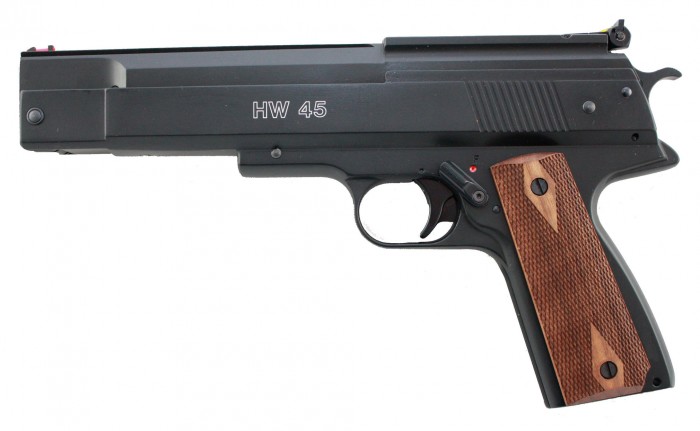
The HW45 is a beautiful piece of construction

Whilst the XS32 is a superb choice, the undisputed king of the spring powered pistol world is the Weihrauch HW45. Despite being several orders of magnitude more expensive than an XS32, particularly if you want the fantastic looking Silver Star model, this is the spring pistol I’d personally have. Of all of the names in the airgun industry, Weihrauch is probably the name you can most trust when it comes to delivering high quality construction and overall great performance. The HW45 is accurate to a tee and shoots a shade over 5 ft/lbs making it one of the most powerful spring pistols on the market and more than enough for a rat or pigeon at 10-15m. The pistol itself does require 13mm mounds to fit additional optics which is unusual but other than that I can’t fault it, one of the best pistols money can buy.

See more spring powered air pistols

So there you have it, a list of a selection of the pistols I would consider to be the best for pest control. If you are looking to purchase one be sure it’s here at Pellpax and stay tuned to the blog for all your airgun information.

Airgun Pellets, what’s the best for me?

So you have your rifle. What’s the first accessory you’re going to need? Well, something to shoot out of it might be an idea; so let’s look at your choice of pellets.

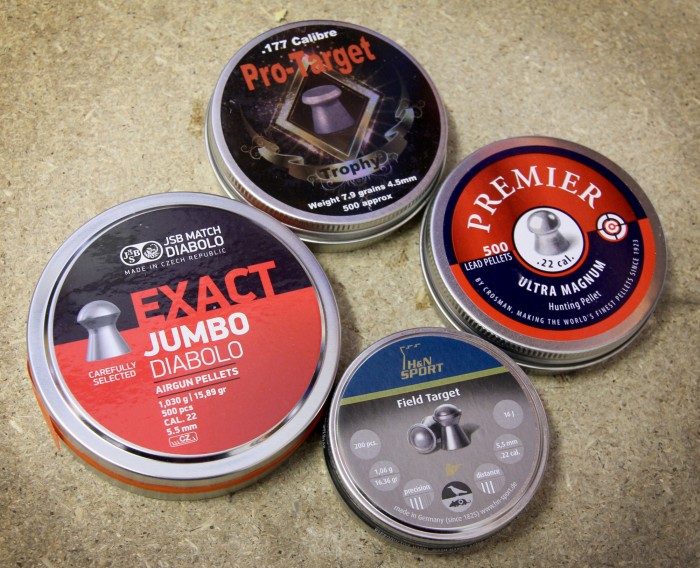
A Sample Pack is a good place to start

Now, the barrel of any air rifle will contain minute imperfections in both the material and rifling, which can have a large effect over shot placement. What this means is, every airgun will respond differently to pellets and different shooters. For example, I have a TX200 that prefers JSB Exact pellets to anything Air Arms have to offer; so much for brand loyalty.

So a good thing to buy would be a Pellet Sample Pack. This way you can try out a couple of different types of pellet before committing to one, to see not only what your rifle prefers, but what kind is best for what you need.

Everyone has a type

Flathead or Wadcutter :

These pellets are ideal for shooting paper targets, where their flat, circular nose will cut a clean hole through paper, allowing you to see exactly where you’ve hit. This makes them ideal for zeroing in scopes and lasers, as well as for competitions, where competitive scoring must be as accurate as possible.

These pellets do also have some hunting utility, particularly in smaller calibres, as they have a high rate of deformation and expansion upon impact, which leads to larger wound channels and less chance to wound.

Notable Examples : Gamekeeper Rat Dispatcher, Pro-Target Trophy, Apolo Champion.

Hollow Points :

These pellets have an indentation in their nose, which, upon impact, drives air into the centre of the pellet, causing rapid expansion. These pellets are designed for hunting and pest control, and are best used at short to medium range to be most effective. This is because the hollow point in the centre can affect accuracy and cause the pellet to tumble at longer distances.

I would recommend them for anyone thinking of using a pistol for pest control, as the higher level of energy transfer from the pellet can help counteract the pistol’s lower power.

One thing that’s good about hollow points is that, thanks to their high rate of expansion, they’re extremely unlikely to over-penetrate, and, although I would always pay concern to what is behind your target, this will minimise the risk.

Notable Examples :Crosman Piranha Hollowpoint, Bisley Pest Control, H&N Baracuda Hunter Extreme.

Pointed : Designed to prioritise accuracy above all other aspects, pointed pellets are created to maximise aerodynamics around the fired pellet to ensure a laser-straight flight path. That’s the theory anyway. However, from my experience, pointed pellets tend to be amongst the most inconsistent.

After some testing, I’ve concluded that it’s down to the way the pellets are manufactured and stored. The pointed pellet works fantastically well only if the point is aligned correctly, and, due to pellets being stored in a tin without much protection, this is the exception and not the rule.

Having said that, my dismissal of pointed pellets has led me to experiment with them less, but I have a couple of friends who swear by Gamekeeper Infiltrators for rabbits, which I am yet to try. So let’s just say I’m waiting to be won over.

Notable Examples : Gamekeeper Infiltrator, Webley Powapell, Apolo Jumbo.

Domed : The classic pellet shape. Domed pellets are by far the most popular shape of pellet and are really a jack of all trades. Their shape leads them to be accurate, with deep penetration and reliable expansion, without excelling in any of those areas.

Honestly, these pellets can do anything pretty well, and if I didn’t have a specific task in mind, these would be the pellets I’d go for. Since they’re the most common type of pellet, there’s a very long list of pellet brands, all with variations in shape, so something is almost guaranteed to suit your shooting style.

One thing to bear in mind with domed pellets is that, more than any other, they offer differing skirt sizes. Now, the skirt is the size of the end of the pellet and effectively equates to how tight the seal is of the pellet inside the barrel. The tighter the seal, the more pressure has to build up behind the pellet for it to be fired, therefore increasing FPS. This skirt size will be represented by an additional .01 when listing the pellets size. For example, .177 pellets which are usually 4.5mm will be listed as 4.50, 4.51, 4.52 etc.

A wider skirt will leave more lead behind inside the barrel. This lead fouling will need to be regularly cleaned to keep your rifle in perfect working order, as large build up can affect both power and accuracy. Also, some magazines, most notably semi-automatic rifles like the Sig Sauer MCX and Beretta CX4, tend to prefer smaller skirted pellets, so I would stick with .50 or .51 if using these rifles.

Notable Examples : ProShot Precision Magnum, Weihrauch Field Target Special, Air Arms Field, JSB Exact Pellets.

What are you made of?

The next important consideration is the material that the pellet is made from. The various qualities of these materials, such as weight and hardness, will play an important role in how the pellet flies through the air and also how the pellet behaves when it impacts the target.


Lead
: The first and by far the most popular choice is lead. Lead has been used for ammunition for literally centuries, thanks to its properties of being not only very heavy for its size, but also a relatively common material.

Its weight makes it a great projectile, as a small lead pellet will transfer more energy into the target than a larger pellet made from a lighter material. This means that the pellet is more effective in smaller calibres, and that it’s also less affected by environmental conditions in flight, such as wind.

Lead was also traditionally chosen because of its relative softness. This leads to deformation upon impact, dramatically widening the wound channel and leading to more effective hunting. Nobody likes wounding animals, so the fact that lead dramatically decreases this risk makes it a great choice for hunters.

Lead is not without its downsides, however, and because of its soft nature, the pellet often leaves a small amount of residue inside the barrel. This is an advantage, as it helps lubricate the barrel, but the build-up will start to affect accuracy and will need to be periodically removed – not a particularly hard job, but something to bear in mind.

Lead is also hazardous to the environment and is particularly toxic when it enters river systems. As a result, many places are becoming stricter on its use in ammunition, particularly the use of lead shot, and this is a trend I can see continuing with people’s growing concern over the environment.

Lead pellets are great for almost any task and are perfect for sub 12ft/lb air rifles, where their rapid expansion ensures humane hunting.

Notable Examples : ProShot Precision Heavy, RWS Super Field, H&N Field Target Trophy.

Copper : The military has been using copper jacketed ammunition for over a century, so copper coated pellets are nothing new in the airgun world. But how do they compare to their lead alternatives?

H&N Rabbit Magnum Power copper pellets

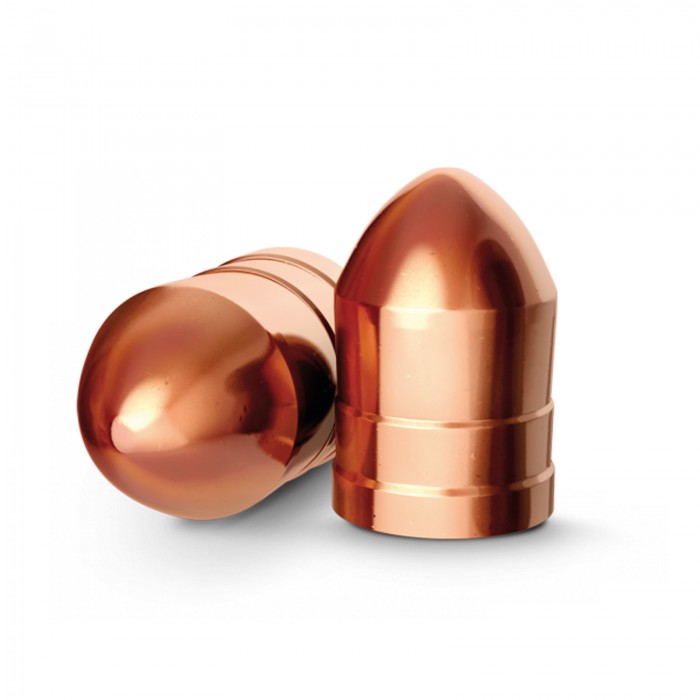
Well, first of all, they provide a handy barrier between the lead and your hands, which is always good, as lead’s not a particularly nice material to ingest. They are also significantly harder than 100% lead pellets, which has two distinct advantages. Firstly, they offer greater penetration, and pointed copper pellets offer some of the deepest penetration of any airgun ammunition.

The harder coating also provides protection against damage, and means that the pellets in the tin are far more uniform. This increases shot-to-shot consistency, and ensures the pellets are all in excellent condition when fired. It’s certain a strong reason to recommend the use of pointed copper pellets, as the problems that lead pellets have with making a reliable point is not present here.

Copper may be far less toxic to animals than lead, but it’s actually far more dangerous to plants. I always remember being taught the best way to kill a tree stump: hammer it full of copper nails. Now, thanks to their great penetration, copper pellets can perform a similar, if largely unwanted, role; so always ensure a safe backstop.

Copper Pellets, I think, are best used in conjunction with high-powered FAC air rifles, where their harder coating and more uniform shape will yield incredibly high accuracy.

Notable Examples : H&N Baracuda Power, Apolo Air Boss Barracuda Copper, Apolo Hollow Point Copper, ProShot Precision Pacifier

Alloy : PBA or Alloy pellets are a fairly new development when it comes to airgun ammunition and are available in quite a limited number of designs.

Alloy pellets have the advantage of being non-toxic and can be safely handled and fired, although I would always ensure a secure backstop. The pellets themselves are often lighter than lead or copper, and consequently can produce higher feet per second. FPS is not necessarily the most important metric when viewed on its own, but it can aid accuracy and give a boost to range.

Alloy pellets do tend to be expensive, however, and I would only recommend them for close range target shooting in 6ft/lb pistols and 12ft/lb rifles, where they will perform very well. Anything more powerful than that, and you’re going to be getting close to the sound barrier (~1125 FPS depending on temperature), something that most airgun pellets are not designed for, and something that will negatively affect your accuracy. The noise they make, however, will be awesome.

Notable Examples : H&N Baracuda Green, Gamo PBA Platinum, H&N Match Green

In Conclusion

Hopefully that clears up some of the jargon surrounding airgun pellets; it can be quite a confusing topic for the uninitiated. I would recommend buying a decent tin of domed lead pellets as they can do pretty much anything well, and then starting out with a sample pack to determine what is best for individual tasks.

The Disabled Shooting Project

Target shooting is the most accessible, inclusive, and integrated of all mainstream sports. With a little innovation and lateral thinking, the sport can be adapted to accommodate a wide range of disabilities and special requirements.

One of the leading lights in the campaign for disabled-friendly shooting clubs is the Disabled Shooting Project (DSP), and at its head is co-ordinator, Elizabeth (Liz) Woodall.

Beginnings

I asked Liz about the conception of the DSP – how and why it came into being. Her story begins in 2005. When Liz was unexpectedly made redundant, she took on a temporary administrative role with the National Small-bore Rifle Association (NSRA), helping to sort out gift-aid on membership.

“Working through the records, I realised that there were a lot of sad letters from people about not being able to continue their membership because of old age or disability. It seemed such a shame that they were giving up the sport they loved and the social life that goes with it. Some of the letters went into quite a lot of detail, and their stories affected me. I thought, ‘I’m certain there are ways to help some of these people to continue shooting.’

“I approached two people from the NSRA: Charlie Blow, who was on the Board of Management, and Dave Froggett, the Coaching and Development Manager. They clicked with the whole concept. The three of us put the thing together, and Charlie was prepared to push the Board to take this seriously.”

Liz, Charlie, and Dave organised a consultation meeting in Wolverhampton.

Launching The Project

“We invited all the people we knew, who had anything to do with disabled shooting. The purpose was to see if there was enough genuine interest in our concept – to find out how far people would actually support it with their own resources – i.e. their time, effort, and money. There was an overwhelming vote to go for it, and so the next step was to put together an outline plan for getting it all off the ground.”

The project was launched. Liz and her husband, Brian, came up with an idea for a logo, and they spent an evening together doing all the artwork; there was, of course, no money available for professional services. (I think it’s a super logo!) Brian was running the NSRA website and editing the NSRA magazine, The Rifleman, so there was no difficulty in spreading the word via those media. The initial introductory leaflet was also a home brew, and Charlie Blow’s company generously paid for it to be printed.   

“Right from the start, the DSP had a voluntary Steering Group that met every four to eight weeks to collaborate on, and oversee, the various areas of work that we were involved in. It consisted of representatives of the main target shooting disciplines, National Governing Bodies, and coaches. These people were fantastically important in making the DSP a success, by promoting and encouraging its work within their own fields. In addition, the Steering Group was truly remarkable for being the first and only fully pan-discipline co-operative body operating in the sport.”

Alongside her admin job, Liz worked at helping people with disabilities to continue with, or to take up, shooting. Eventually, the paid work came to an end, but Liz continued to work with the DSP. When Sport England heard about the project, they expressed an interest in funding it, provided that it was taken over by British Shooting. Liz and Charlie agreed, and Liz applied (successfully) for the job of co-ordinator.

How the DSP Works

I asked Liz, “How does the DSP work?”

“Well, a shooting club will contact us for advice. This might be general advice, like how to adapt the clubhouse for wheelchair users, or advice about helping a particular individual to take part, which might involve special equipment. We pass on information via email and telephone, and sometimes we’ll pay a visit, to see what’s already in place and to talk to members about their requirements. A lot of it is about motivation.

“We’re also contacted by a lot of individuals: disabled people, their relatives, friends, or carers – and even specialist medical professionals working with them. They want to know if target shooting could be an option for them; the answer is invariably “yes”. Then they ask how and where they can get involved. The three key requirements are: a welcoming club, suitable equipment, and a sympathetic coach – so, from the start, we set about making sure that those would all be available to as many people as possible.”

The Buddy System

“A club established in the DSP system will partner a club that’s new to it, giving advice and support. For example: a new clubhouse is being built, with disabled access in mind. A club that’s already gone through this process can offer advice based on their own experience. It’s not difficult; it just needs a bit of knowledge. The same system applies to coaches who are learning how to work with disabled shooters and need a more experienced mentor; and also to individual shooters, who can buddy-up with someone who has a similar disability, so they can help each other along. This scheme is particularly valuable where a club or shooter is geographically isolated – they can be helped via phone, email, skype, etc.”

Liz gave a lovely example of the buddy system.

“The longest-distance help we provided was to the Falkland Islands, where a disabled chap wanted to join the Port Stanley club. After contacting us, not only was the club coach buddied-up with coaches in Britain, but several clubs over here invited the Port Stanley people to take part in postal competitions, which was a huge boost to that club’s activities.”

Challenges of Funding

In July 2014, Sport England’s funding came to an end, and although the NSRA would have liked to take it on, this was not financially feasible. It was agreed that Liz could hang onto the logo and the website, and the DSP went back to being operated on a voluntary basis.

One of the most important services provided by the DSP is the development of equipment for individual shooters. Those working with the project devote a lot of time to sourcing off-the-shelf equipment that would be particularly suitable for those with some disabilities, and also finding ways of adapting it to suit even more people.

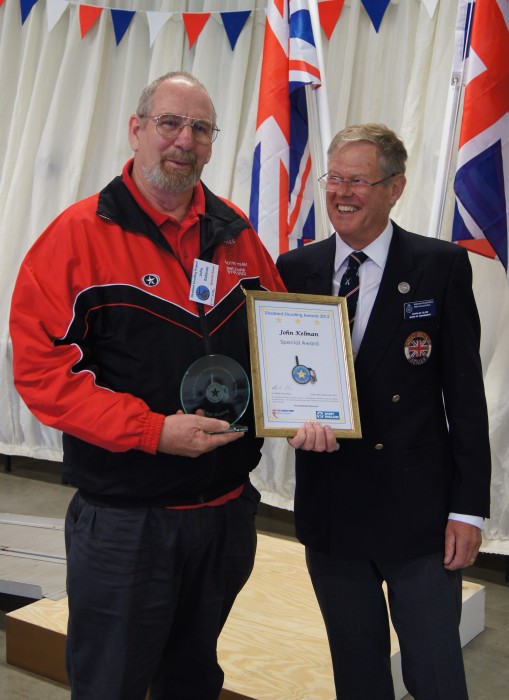
Even so, some shooters, particularly those with more severe disabilities, really need one-off pieces of equipment, tailor-made for them. In some cases, these aids have enabled shooters with disabilities to reach very high standards, and to compete in national and international competitions. One of the leading experts in this field is John Kelman (featured in our previous blog), who joined the DSP at the initial consultation meeting in Wolverhampton.

Liz also mentioned the charity, Remap (http://www.remap.org.uk/). Remap recruits retired scientists and engineers, who will construct one-off pieces of kit that can improve the quality of life for disabled people. This work is all done on a voluntary basis.

The Future of the DSP

So what does the future look like for the Disabled Shooting Project?

“My hope is that many of my colleagues on the Steering Group will be prepared to re-form it as soon as it’s possible to do so. This may be dependent on some grant or sponsorship, as they are geographically widely spread, and their travelling expenses really ought to be covered, as they were in the past. As you can see, there is going to be a lot for me to do to get the whole thing running properly again on a voluntary basis.”

If you would like to know more about the work of the DSP, visit the website: http://disabledshooting.org.uk. Plans are in hand to up-grade and up-date this site over the coming months. To contact the DSP, email dsp@disabledshooting.org.uk or phone 07527 579 686.

You can learn more about the world of disabled shooting with our recent post, ‘A Guide To Disabled Shooting’

Out and About in Norfolk with the Pellpax Bullet

Pellpax Bullet
The Pellpax Bullet, accompanied by our very own road hog….

It’s been a busy summer for the Pellpax Bullet. Designed and built by skilled craftsmen at GSG Shepherds’ Huts, in Norwich, our bespoke trailer has certainly turned a few heads at shows and carnivals this year.

About two years ago, we decided that it would be good to get out and about a bit – to be a part of some of Norfolk’s marvellous events – and therefore we needed a trailer. Our trailer had to be big enough to display equipment, with storage space for additional stock, and standing room for staff. It had to be fully mobile, stable, spectacular, and safe … and it had to be shaped like a bullet.

Bullet’s Construction

The Bullet’s frame is constructed from semi-circular plywood ribs, which are joined together to form hoops, and the exterior cladding comprises narrow strips of Accoya, giving the illusion of a curve. Accoya is the world’s leading brand of acetylated softwood – a material that is dimensionally stable, extremely durable, and resistant to decay. The interior cladding is painted softwood, and the floor is made of engineered oak. The Bullet’s coned nose is a complex structure of studwork and cladding.

Out on show

Our travelling airgun store, the Bullet, goes on tour
A customer checks out the Bullet’s offerings.

On the weekend of June 24th and 25th, we took the Bullet to the Suffolk Armed Forces Week celebrations in Felixstowe. Our next-door neighbours were the Royal Marine Association (RMA), with their zero-danger firing range, and it was a pleasure to talk to these guys about the work that the RMA does for the Royal Marine family. This was a particularly busy and exciting weekend, as the Royal Marines’ Darell’s Day celebrations were being held in Felixstowe at the same time.

In August, we joined thousands of others at the ever-popular annual Cromer Carnival, famous, among other things, for an aerobatic display by the Red Arrows. Since the 1950s, the focus of Cromer Carnival has been a parade of floats on the Wednesday of carnival week; but during the first half of the 20th century, all the fun happened on the new pier, built in 1901. Amazingly, Cromer has been enjoying an annual week-long fair since the 1280s!

One of the most popular events in Norfolk is the Aylsham Agricultural Show, held each August Bank Holiday Monday at the Blickling Estate. The only problem with this one-day show is that you’re hard pressed to fit everything in! This year there were classic cars, military vehicles, marching bands, dog training displays, rural crafts, art exhibitions, cookery theatre, hot-air balloon rides, sheepdog trials …

And alongside all of this, we were delighted to welcome people to the Pellpax Bullet, and we received some lovely comments. Our favourite was from a little boy, who asked us if the Bullet was a submarine!

Stay tuned to the blog for details of further adventures on the Pellpax Bullet. To learn more about the construction of the Bullet, go to GSG Shepherd’s Huts

A Guide To Disabled Shooting

This month our correspondent Hazel Randall takes a close look at the world of disabled shooting….

Target shooting is one of the most inclusive and adaptable sports. In the last 20 years, there’s been a tremendous change in attitude towards disabled sport in general, heavily influenced by dedicated individuals who join together to form strong support systems. To understand where it all began, let’s go back to the 1940s, to the father of the Paralympic Games…

The Paralympic Games

Sir Ludwig Guttmann (1899-1980) was a brilliant German neurologist and passionate advocate of physical exercise as a means of therapy for injured military personnel. Dr Guttmann, a Jewish refugee, set up the National Spine Injuries Centre at Stoke Mandeville Hospital, in Buckinghamshire. This specialist unit, opened in February 1944, became the birthplace of revolutionary new therapeutic systems, which focussed on the building of physical strength and self-respect.   

On July 29th 1948, as the Olympic Games were officially kicked off in London, the very first Stoke Mandeville Games were being held at Stoke Mandeville Hospital. Organised by Dr Guttman, this competition was a sporting arena for wheelchair athletes from all over the UK – a harbinger of great things to come. When Dutch ex-servicemen joined the competition in 1952, the event became known as the International Stoke Mandeville Games.

In 1960, Dr Guttman held the 9th Annual International Stoke Mandeville Games in Rome, alongside the Olympic Games, and from then on, the newly named Paralympic Games have taken place every four years. Since the 1988 Games in Seoul, Korea, the Paralympics have been held in the same host city as the Olympic Games, and the two competitions have been united.

The word Paralympic is a blend of Olympic with the prefix para- (Greek: ‘beside’), denoting alteration or modification.

The Disabled Shooters Group

Adrian Last takes aim DSG President Adrian Last in action

Richard Scott was a keen skeet shooter. According to Mr Scott’s wishes, donations collected at his funeral in 1995 were used to fund a have-a-go disabled shooting event at Sandringham Shooting Ground, in Norfolk. At the time, Sandringham Shooting Ground was managed by Graham Brown, whose wife, Yvonne, arranged for participants to be accommodated overnight at a nearby nursing home, where she worked.

The success of this event led to others of its kind, and it was not long afterwards that the Disabled Shooters Group (DSG) was founded by Adrian Last and Brian Wilkie, two friends who first met at the event sponsored by the late Richard Scott. Brian Wilkie suffered from a severe form of Multiple Sclerosis (MS) and died in 2005.

In 1984, at just 24 years old, Adrian Last had a serious motorcycle accident, which resulted in a paralysed right arm and the amputation of his right foot. The following year, having regained the use of his arm, Adrian got back on a bike and resumed the sport he loved: endurance racing.

“With my prosthetic foot, I had no toe movement, and couldn’t operate a foot brake, so my bike was adapted for me. The rear brake was controlled by a lever on the left handlebar, and I continued to compete in national competitions, alongside able-bodied motorcyclists.”

But in 1990, another terrible motorcycle accident left Adrian even more damaged. After lying unconsciousness for eight days, he awoke to discover that two of the vertebrae in his neck had been broken, and that he had lost the use his legs; he would never again be able to ride a motorcycle. But two years later, at the motorcycle club’s annual clay shoot, 32-year-old Adrian was launched into his next passion: clay shooting.

“I’d shot before. Being a farmer’s son, I was handling guns from 11 or 12 years old, shooting pigeons and rabbits on the farm. But it had been a while!”

Last year, Adrian won the World English Sporting and the World Sport Trap titles, bringing his total world golds to five. He has also won one European and many British gold medals, and was the first winner of the CPSA award for Disabled Shooter of the Year. Fifty-seven-year-old Adrian is the DSG’s life president and a determined campaigner for disabled shooting. Over the last 20 years, he has helped to bring the CPSA’s attention to this area of the sport, and his efforts have contributed to increased accessibility of shooting sports in the UK.

He said, “I don’t mind what you ask about my disabilities. If talking about this inspires somebody to get into shooting sports, then I’m happy.”

Sam Nunn shoots some clays DSG Secretary Sam Nunn takes aim with some clay shooting

Sam Nunn is the DSG’s current secretary, responsible for organising shooting events. Three of Sam’s limbs are affected by a very rare syndrome called femur-fibular-ulna complex, and he has been using a prosthetic leg since he was just 15 months old. Sam, who won the CPSA’s Shooter of the Year award in 2014, has been shooting from the age of 12.

“I used to go out shooting rabbits and pigeons with my uncle. But when I was 17, I fancied having a go at clay target shooting, so I started looking around for a club. There were very few clubs that were accessible to disabled shooters, and certainly none near me.”

I asked Sam if things have changed in that respect.

“Yes. I’ve noticed, over the last few years, that attitudes towards disabled shooters have improved a lot. Of course, some disciplines are more accessible than others. For example, an Olympic Trap is shot from a concrete pad, which is easier for wheelchair users than grass.”

Sam told me that he has to choose his gun carefully.

“Because my arms are short, I opt for a gun with a shortened stock, which is typically designed for ladies; I’ve always been able to find something to suit me. For some, though, no gun off the shelf will be suitable, but it’s possible to obtain models with specially made stocks or electric triggers.”

The Disabled Shooters Group is the national body for disabled clay target shooting and is in partnership with the Clay Pigeon Shooting Association (CPSA). If you would like to get in touch with the DSG, please contact Sam Nunn at Sam.Nunn@isgplc.com.

Target Shooting is Accessible, Inclusive, and Integrated

Mick Kirby, of the Sussex CPSA committee, who had his lower left arm amputated, following a stroke, has been instrumental in arranging have-a-go days for people with disabilities.

“We ran one of these events last September, which was really well attended. There was a boy with autism, who particularly enjoyed the experience, thanks mainly to one of our members, who forged a good connection with the boy. This lad’s father was really chuffed.”

Mick told me, “Sometimes I’ll bump into someone at a competition, who’s still shooting after being introduced to the sport at one of our events. I don’t know if this particular boy has continued to shoot. I hope so.”

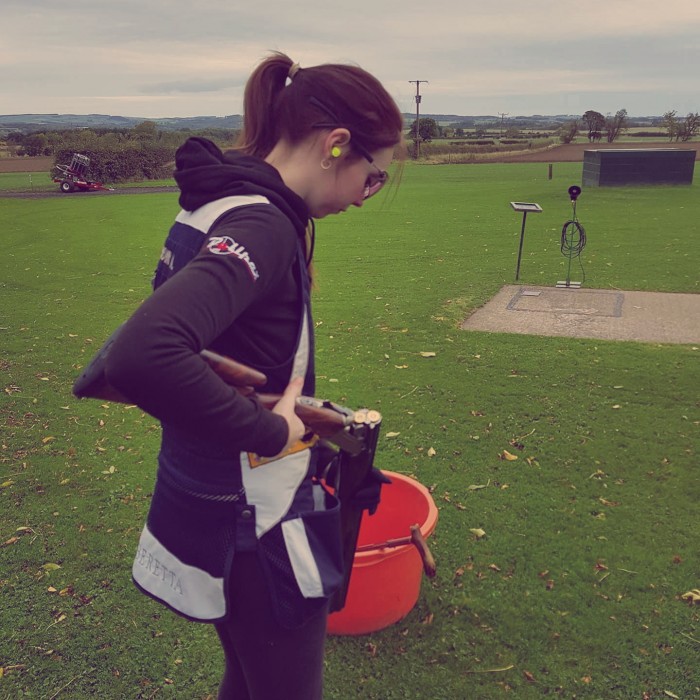
Mick is a determined character and has worked out a way of loading his gun one-handed, with the aid of a hip holder. At national competitions, he has won gold and silver medals in British skeet and American skeet, and he is also a referee. Mick is committed to promoting shooting for people with disabilities, but actually has a very positive view of the sport’s inclusive nature.

“The majority of clubs include everyone, without discrimination. Over the last few years, I’ve seen a positive change in attitude.”

I asked Mick how he will continue to promote disabled shooting. His reply was simple.

“I promote the sport best by shooting as an able-bodied shooter.”

Matt Skelhon


Matt Skelhon is a 32-year-old Paralympic gold medallist, whose first experience of target shooting was at the annual Inter Spinal Unit Games at the Stoke Mandeville Stadium.

Matt spent four months at the Princess Royal Spinal Cord Injuries Centre, Sheffield, after breaking his back in a road traffic accident when he was just 21 years old. The injury caused paraplegia, which is paralysis of the lower body. With lots of support from family and friends, Matt’s outlook was optimistic, and he made every effort to hurry up his recovery so that he could get on with life.

“I was always positive; I never despaired. I was pretty lucky.”

As part of his rehabilitation, Matt had a go at wheelchair basketball and archery, but it was during the WheelPower Inter Spinal Unit Games at the Stoke Mandeville Stadium, in April 2006, that he discovered a passion for target shooting. And he was very good at it!

He told me, “I’m a bit of a perfectionist, and I like a challenge.”

Two years later, the British National Anthem was playing at the 2008 Paralympic Games in Beijing, China, as Matt received a gold medal for the 10m air rifle event in the SH1 classification. SH1 is for competitors who do not require a shooting stand.   

“I felt absolute elation. Leading up to the competition, I’d been focussing on training, just thinking about the job in hand. It had been all about the shooting. And then, suddenly, here I was, with a gold medal round my neck. It was surreal!”

At the 2012 Paralympics in London, Matt won silver and bronze in the 10m and 50m air rifle events respectively, and he also competed in the 2016 Games in Rio de Janeiro, Brazil. He was named Sportsman of the Year by the Peterborough Telegraph. The Pellpax team wishes him well for the 2020 Paralympic Games in Tokyo, Japan.

John Kelman

John Kelman is an amazing man. He takes the concept of thinking outside the box to a place where you can’t even remember what the box looks like.

When he began his coaching career, John was confronted with a hurdle that he has had to overcome many times during his life: dyslexia. Intelligent, compassionate, and innovative, John struggled with the reading and writing aspect of studying for coaching qualifications, but this difficulty was certainly not going to get the better of him. He persevered, and now holds the position of Regional Coach – the highest coaching level recognised by the National Small-bore Rifle Association.

John was determined to provide coaching to people with disabilities. “In the year 2000,” he said, “most shooting clubs didn’t want to know about anyone with a disability – so I started my own club.”

John has designed and constructed shooting aids for many very different needs, and each of his innovations must be ratified by the NSRA to ensure that users are not given an unfair advantage in competitions.

DSG Shooter Eirian uses his feet to aim and shoot.

Eirian, who had cerebral palsy, had very little control over most of his body, including his head. This meant that he couldn’t focus his sight on the target, aim the gun, and pull the trigger, all at the same time. John told me, “He was trapped in his own body.”

However, Eirian had good control of his ankles and feet – in fact, he propelled his wheelchair with his toes. So John devised a way for Eirian to manoeuvre the barrel of the gun by means of a treadle, which he also used to operate the trigger. John fixed a laser onto the barrel, so that Eirian only had to watch the target; when the laser hit the centre, he’d shoot.

Another student, also with cerebral palsy, was 21-year-old Paul, whose hands were turned outward at an extreme angle. “Paul can’t turn his hands,” the carer told John. “He’s never seen his palms.” John borrowed a lace from the carer’s shoe and looped it around Paul’s wrist; with assistance, Paul then had control over pulling the trigger.

John went on to construct a tidier and safer mechanism for Paul to use – “I called this the Equaliser, as it made disabled shooters equal with able-bodied shooters.” But it was probably that first taste of achievement that brought Paul back again for another go.

And then there was Vic.

Vic Morris taking aim A close up of shooter Vic Morris, in action

“I was approached one day by an elderly gentleman who said he’d read an article about me in the local paper. ‘Can you get my son shooting?’ he said. I said, ‘I’ll give it a go.’ I was expecting a little lad, but then in comes a grown man, operating his wheelchair with his chin. I went to shake his hand, and he said, ‘Nothing works, mate.’ Within a week I had this man shooting; within 12 months he was entering national competitions.”

Vic Morris was 28, married, and a father of two little girls when his neck was broken in a rugby scrum, leaving him paralysed from the neck down.

John built a complex machine, whereby the gun was fixed into a support, and the end of the barrel was weighted. A butt plate supported a bracket that in turn supported the stock, and because Vic had excellent control of his head muscles, he could press the stock down with his chin, levering the other end up. Vic’s wife loaded the gun for him, and the trigger was connected to a switch, which Vic operated with his tongue.

Vic Morris became a very good shooter, and he and John were close friends. Vic died in July this year.

As I thanked John for taking the time to talk to me, he said, “I have a challenge for anybody with a disability. Come and see me, and I’ll do my very best to get you shooting – whatever your disability. Just contact me at pistolcoachjk@gmail.com.”

British Blind Sport

disabled shooter paul tries out some new gear Trial shooter, Paul, takes aim with the specialist equipment

A quarter of a century ago, nobody in the UK with visual impairment was shooting, but in 1994, Ken Nash, a life member of both the National Small-bore Rifle Association (NRSA) and British Blind Sport (BBS), introduced shooting for the blind into the UK. There are now more than 30 centres across the country that welcome visually impaired shooters. Working alongside these clubs, BBS organises competitions, supports the education of school teachers, and provides classifications to blind and partially sighted athletes.

In the Summer 2017 issue of the NSRA’s in-house magazine, On Target, Ken introduces Ecoaims Vis500, a new audio aiming device that has been chosen by the NSRA for visually impaired shooting in the UK. An infrared LED is placed near the target, and the Vis500 converts the infrared signals to audio waves. Via his sense of hearing, the shooter’s skills of calculation, concentration, and steadiness can be tested to the same extent as those of a sighted shooter.

Michael Whapples

One of the experts involved in the selection of the Vis500 was Michael Whapples. Michael has been almost totally blind since birth. He attended a special school for visually impaired children, where he first experienced the joys of target shooting. He showed enormous aptitude for the sport, and it became his passion.

Studying physics at Nottingham University posed problems – and not only for Michael. One of his tutors, Janette Dunn, published a paper entitled Teaching a Physics Laboratory Module to Blind Students, in which she analysed the problems posed by lack of vision. Michael was one of two subjects in her case study, and, in reading this interesting article, it becomes apparent that a huge adversity like blindness does not always outweigh copious amounts of talent, common sense, and intelligence.

Michael’s ‘day job’ is developing software for producing brail documents. Other software projects include a Smart phone app that provides an audio compass for visually impaired sailing, and an app to allow configuration of the VIASS aiming system. But Michael, like so many of the experts I’ve spoken to, embraces the flexibility of this sport.

“In target shooting, visual impairment doesn’t necessarily have to go down the audio route. Shooting can be adapted in so many ways – for example, those with some useful vision can do disciplines such as benchrest shooting, where a scope is permitted. Also, when thinking about this, whilst I know of no shooter using it, blind archers use the ‘back of the hand’ tactile sighting system, which provides a reference point for elevation. Maybe this method can be adapted for shooters.”

Steven Richardson

Last year, I had the pleasure of talking to Steven Richardson, who lost both legs and five fingers in an IED explosion in Afghanistan in 2010. Steven was part of an eight-man team who cycled 3051 miles across the USA, raising £100,000 for Help for Heroes. He participates in several sports, including shooting. You can read The Big Interview: Steven Richardson here

In Memoriam, Vic Morris

Many thanks to Dave Froggett, the NSRA (National Small-bore Rifle Association) Coaching and Development Manager, for putting me in touch with many of the people who contributed to this article. 

In memory of Vic Morris